









Introduction: Speed as a New Culinary Competence
For most of culinary history, time was an unavoidable ingredient. Long simmering, slow fermentation, patient knife work, and gradual heat transfer defined how food was prepared and understood. Speed, when it appeared, was often associated with compromise—lower quality, reduced flavor, or industrial shortcuts.
In the 21st century, this equation has fundamentally changed.
Advances in kitchen tools, digital technology, material science, and process design have made rapid cooking not only possible, but increasingly precise, consistent, and high-quality. Speed is no longer the enemy of craftsmanship; when properly supported by technology, it becomes a skill in its own right.
This article explores how modern kitchens—professional and domestic alike—use tools and technology to enable fast cooking without sacrificing flavor, nutrition, or creativity. It examines the evolution of kitchen equipment, the scientific principles behind rapid techniques, and the broader implications for efficiency, sustainability, and culinary culture.
1. The Changing Meaning of “Fast” in Cooking
1.1 From Shortcuts to Systems
Historically, fast cooking meant:
- Pre-made ingredients
- Simplified recipes
- Reduced technique
Today, speed is achieved through system-level optimization, not shortcuts. This includes:
- Precise heat control
- Automation of repetitive tasks
- Parallel processing in the kitchen
Technology allows cooks to do more things at once, not fewer things overall.
1.2 Time as a Design Variable
Modern kitchens treat time as something to be engineered:
- Heat transfer is accelerated
- Preparation steps are modularized
- Cooking processes are overlapped
The result is faster output with greater predictability.
2. The Scientific Foundations of Rapid Cooking
2.1 Heat Transfer and Energy Efficiency
Rapid cooking relies on understanding:
- Conduction (direct contact)
- Convection (air or liquid movement)
- Radiation (infrared, microwave)
Modern tools are designed to maximize energy delivery exactly where it is needed, reducing wasted time and uneven cooking.
2.2 Precision Over Intensity
Speed does not necessarily mean higher temperatures. Instead, it means:
- Controlled heat application
- Minimal thermal lag
- Faster response to adjustments
Precision allows food to reach optimal doneness more quickly.
3. High-Performance Heating Technologies
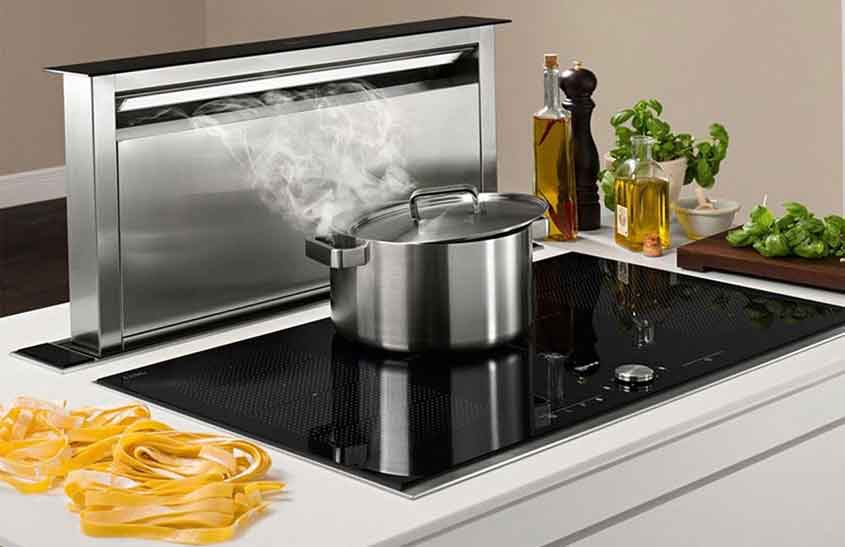
3.1 Induction Cooking: Speed Through Direct Energy Transfer
Induction cooktops heat cookware directly using electromagnetic fields. Benefits include:
- Extremely fast heat-up times
- Immediate temperature changes
- Reduced ambient heat
For rapid cooking, induction offers both speed and safety, especially in professional kitchens.
3.2 Infrared and High-Intensity Ovens
Infrared ovens and salamanders deliver focused radiant heat, enabling:
- Rapid browning
- Short cooking cycles
- Minimal moisture loss
These tools are especially valuable for finishing dishes quickly without reheating interiors.
4. Microwave Technology Reconsidered
4.1 Beyond Reheating
Modern microwave technology has evolved far beyond simple reheating. Advances include:
- Inverter technology for stable power output
- Combination microwave-convection systems
- Sensor-driven moisture control
These innovations allow microwaves to cook food evenly and quickly, not just warm it.
4.2 Scientific Control of Water Molecules
Microwaves excite water molecules directly, which:
- Reduces cooking time dramatically
- Preserves internal moisture
- Minimizes surface overcooking
When used deliberately, microwave-assisted cooking is both fast and precise.
5. Pressure Cooking: Compressing Time Through Physics
5.1 How Pressure Accelerates Cooking
Pressure cookers raise the boiling point of water, allowing:
- Higher cooking temperatures
- Faster breakdown of fibers
- Accelerated gelatinization of starches
What once took hours can now be achieved in minutes.
5.2 Modern Pressure Technology
Contemporary pressure cookers integrate:
- Digital sensors
- Programmable pressure stages
- Safety automation
This removes the risk traditionally associated with pressure cooking while preserving its speed advantage.
6. Multitasking Through Smart Appliances
6.1 Programmable Cooking Sequences
Smart appliances allow cooks to:
- Set delayed starts
- Automate temperature changes
- Coordinate multiple steps without constant supervision
Time-intensive tasks run in the background while other work continues.
6.2 Networked Kitchen Ecosystems
In advanced kitchens, devices communicate:
- Ovens sync with timers
- Sensors notify completion stages
- Data is logged for repeatability
This coordination reduces idle time and human error.
7. Pre-Processing Tools: Speed Begins Before Heat
7.1 High-Speed Food Processors and Blenders
Modern processors can:
- Chop, slice, and puree in seconds
- Maintain uniformity across batches
- Reduce manual labor dramatically
Uniform preparation leads to faster and more even cooking.
7.2 Precision Cutting Tools
Advanced mandolines, slicers, and automated cutters ensure:
- Consistent thickness
- Faster heat penetration
- Predictable cooking times
Knife skill remains valuable, but technology enhances consistency.
8. Vacuum Technology and Rapid Marinades
8.1 Vacuum Sealing for Accelerated Flavor Infusion
Vacuum systems remove air from ingredients, allowing:
- Marinades to penetrate quickly
- Flavors to distribute evenly
- Reduced resting time
What once required overnight marination can be achieved in minutes.
8.2 Texture Control Through Pressure Differential
Vacuum compression alters cell structure in fruits and vegetables, enabling:
- Faster pickling
- Rapid infusion
- Novel textures without long processing
Speed becomes a creative tool.
9. Sous Vide Reimagined for Efficiency
9.1 From Slow to Strategic
Sous vide is often associated with long cooking times, but when integrated intelligently:
- Pre-cooked proteins can be finished rapidly
- Batch cooking reduces daily workload
- Reheating becomes precise and fast
Time is shifted rather than eliminated.
9.2 Hybrid Fast-Finish Models
Combining sous vide with high-heat finishing tools (searing stations, torches) allows:
- Immediate service
- Perfect doneness
- Minimal last-minute cooking
Speed at service becomes predictable.
10. Automation and Robotics in Rapid Cooking
10.1 Automated Stirring and Cooking Stations
Automated systems can:
- Maintain constant motion
- Control heat dynamically
- Execute recipes identically every time
These systems excel at repetitive, time-sensitive tasks.
10.2 Robotics and Consistency
Robotic cooking arms and automated grills reduce:
- Labor bottlenecks
- Variability under pressure
- Fatigue-related errors
Speed and consistency reinforce each other.
11. Data-Driven Cooking Decisions
11.1 Sensors and Real-Time Feedback
Temperature probes, humidity sensors, and optical scanners provide:
- Instant cooking status updates
- Early warnings of overcooking
- Objective doneness indicators
Decisions are faster because information is immediate.
11.2 Learning from Cooking Data
Recorded cooking data allows:
- Process optimization
- Reduction of unnecessary steps
- Continuous improvement over time
Speed is refined through feedback loops.
12. Rapid Cooking and Flavor Integrity
12.1 Preserving Volatile Aromatics
Shorter cooking times reduce:
- Loss of aroma compounds
- Oxidation of delicate flavors
- Nutrient degradation
Speed can enhance flavor clarity when properly managed.
12.2 Managing the Maillard Reaction Efficiently
High-intensity, short-duration heat maximizes browning while minimizing moisture loss. Technology enables:
- Precise surface control
- Rapid flavor development
- Consistent results
Flavor no longer requires extended exposure.
13. Nutrition and Rapid Cooking
13.1 Reduced Nutrient Loss
Faster cooking often preserves:
- Vitamins sensitive to heat
- Natural pigments
- Textural integrity
Time efficiency aligns with nutritional preservation.
13.2 Controlled Cooking Environments
Sealed and monitored systems reduce:
- Leaching into water
- Overcooking margins
- Oxidative stress on ingredients
Speed supports health when paired with control.
14. Professional Kitchens: Speed Under Pressure
14.1 Service-Time Constraints
In professional environments, speed is essential during service. Technology enables:
- Parallel cooking streams
- Just-in-time finishing
- Reduced waiting between courses
Efficiency improves both workflow and guest experience.
14.2 Labor Optimization
Tools that accelerate cooking reduce:
- Physical strain
- Skill bottlenecks
- Dependency on large teams
Human effort shifts toward creativity and oversight.
15. Home Kitchens and Lifestyle Transformation
15.1 Time Scarcity and Modern Living
For home cooks, speed addresses:
- Busy schedules
- Limited energy
- Desire for fresh food without long preparation
Technology makes high-quality meals feasible on short timelines.
15.2 Democratization of Professional Techniques
Tools once limited to restaurants are now accessible at home, enabling:
- Faster weekday cooking
- Higher consistency
- Reduced reliance on ultra-processed foods
Speed supports better everyday eating habits.
16. Sustainability and Energy Efficiency
16.1 Reduced Energy Consumption
Faster cooking often means:
- Shorter appliance run times
- Less ambient heat loss
- Lower total energy usage
Efficiency benefits both economics and the environment.
16.2 Waste Reduction Through Precision
Rapid, controlled cooking reduces:
- Overcooked food waste
- Failed batches
- Spoilage from long preparation times
Speed contributes to sustainability when paired with accuracy.
17. Cultural Shifts in Cooking Philosophy
17.1 Rethinking “Slow Is Better”
While slow cooking has cultural value, it is no longer the sole path to quality. Modern philosophy recognizes:
- Context-dependent techniques
- Multiple valid time scales
- Speed as intentional choice
Cooking time becomes flexible rather than ideological.
17.2 Respecting Tradition Through Adaptation
Technology does not erase tradition—it allows it to adapt. Classic dishes can be:
- Reproduced faster
- Made more consistently
- Shared more widely
Cultural continuity is strengthened, not weakened.
18. Risks and Misconceptions
18.1 Over-Reliance on Automation
Technology should support, not replace, understanding. Without foundational knowledge:
- Errors propagate quickly
- Flavor balance may suffer
Speed amplifies both skill and mistake.
18.2 The Illusion of Effortlessness
Fast cooking still requires:
- Planning
- Ingredient quality
- Technical literacy
Technology removes friction, not responsibility.
19. The Future of Rapid Cooking
19.1 Adaptive and Predictive Systems
Future kitchens may:
- Anticipate cooking needs
- Adjust automatically to ingredient variability
- Optimize workflows in real time
Speed will be dynamically personalized.
19.2 Human Creativity at the Center
As tools handle execution, humans focus on:
- Concept
- Flavor design
- Cultural meaning
Technology accelerates cooking so that creativity has more room.
Conclusion: Speed as a Culinary Advantage, Not a Compromise
Leveraging kitchen tools and technology for rapid cooking represents a fundamental shift in how we understand time, skill, and quality in the kitchen. Speed, when grounded in science and supported by thoughtful design, no longer diminishes food—it refines it.
Modern cooking tools allow heat to move faster, information to travel instantly, and processes to align seamlessly. The result is not rushed food, but intentional efficiency—meals that are precise, flavorful, nutritious, and responsive to contemporary life.
In this new paradigm, cooking quickly is not about doing less. It is about doing things better, with clarity, control, and confidence. Speed becomes not a concession to modern life, but one of its greatest culinary opportunities.