









Cairo, the bustling heart of Egypt, is a city of contrasts, where ancient history and modern life coexist in a vibrant, dynamic environment. This harmony is not only visible in its monuments and architecture but also in its food scene. One of the most compelling aspects of Egyptian culture is its street food, which offers both locals and visitors a window into the country’s rich culinary heritage.
Street food in Cairo is more than just quick bites; it is a reflection of Egypt’s historical influences, regional diversity, and modern-day creativity. In this article, we explore the diverse world of Cairo street food, from the bustling markets to the corner vendors, and dive into the stories, flavors, and cultural significance behind these popular street food items.
The Allure of Cairo’s Street Food Culture
Street food in Cairo is intricately tied to daily life. It’s a quick, affordable, and convenient way for people to eat, but it’s also an immersive cultural experience. The streets of Cairo are teeming with food vendors, each offering a unique product shaped by local traditions, historical influences, and the dynamic mix of Egypt’s urban and rural environments.
Cairo’s street food scene is characterized by the following:
- Street vendors: From small carts on every corner to elaborate street-side kitchens, Cairo’s food vendors create a communal and open-air atmosphere where people of all backgrounds can enjoy food together.
- Cultural fusion: Egyptian street food blends influences from Arabic, Mediterranean, and African cuisines, reflecting the country’s long history as a crossroads of civilizations.
- Affordability: Street food in Cairo is cost-effective, making it accessible to both locals and tourists, with a variety of offerings catering to different tastes and dietary preferences.
Iconic Street Food Dishes in Cairo
Cairo is home to a range of unique and flavorful street foods, each with its own origins and preparation methods. Let’s explore some of the most beloved dishes.
1. Koshari
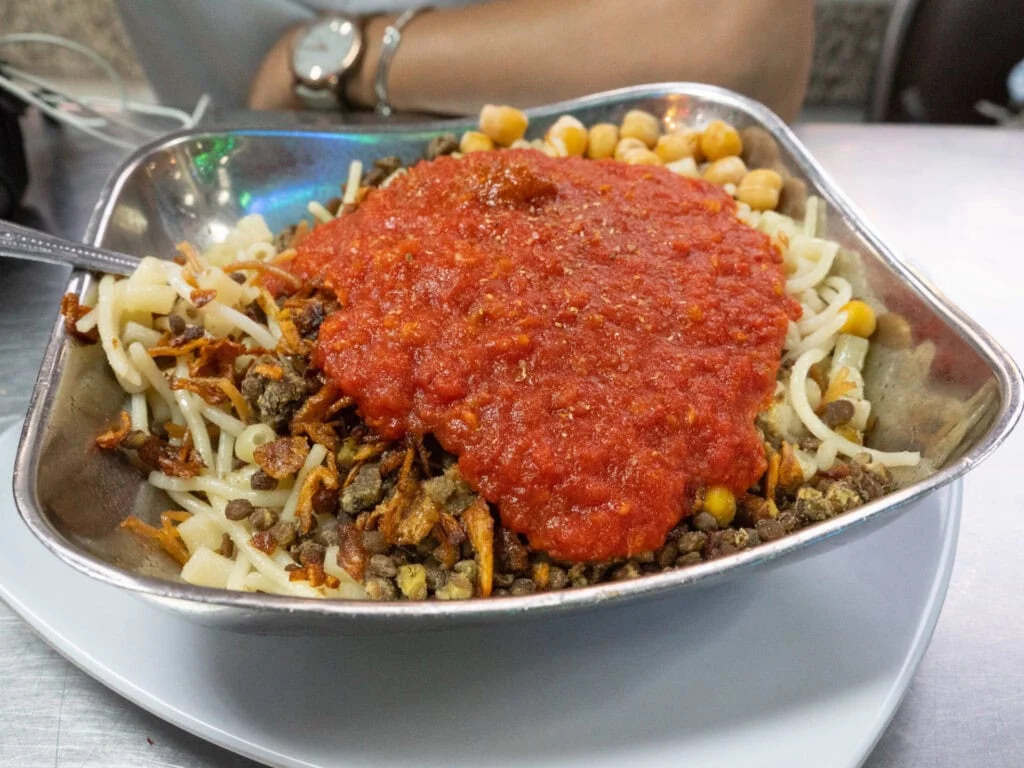
Koshari is considered the national dish of Egypt and is a staple on Cairo’s streets. A humble yet satisfying dish, Koshari consists of rice, lentils, macaroni, and fried onions, topped with a spicy tomato sauce and a drizzle of garlic vinegar.
- History: Koshari has Indian and Mediterranean roots and was influenced by the Indian dhal and pasta dishes introduced to Egypt during the 19th century. Over time, it evolved into a quintessential Egyptian comfort food.
- Where to Find It: Koshari can be found at street vendors, in small restaurants, and even at dedicated Koshari shops throughout Cairo.
- Cultural Significance: Koshari represents the blend of different food traditions in Egypt. It’s not just a meal—it’s a social experience, often eaten during lunchtime and shared with friends or family.
2. Falafel (Ta’ameya)
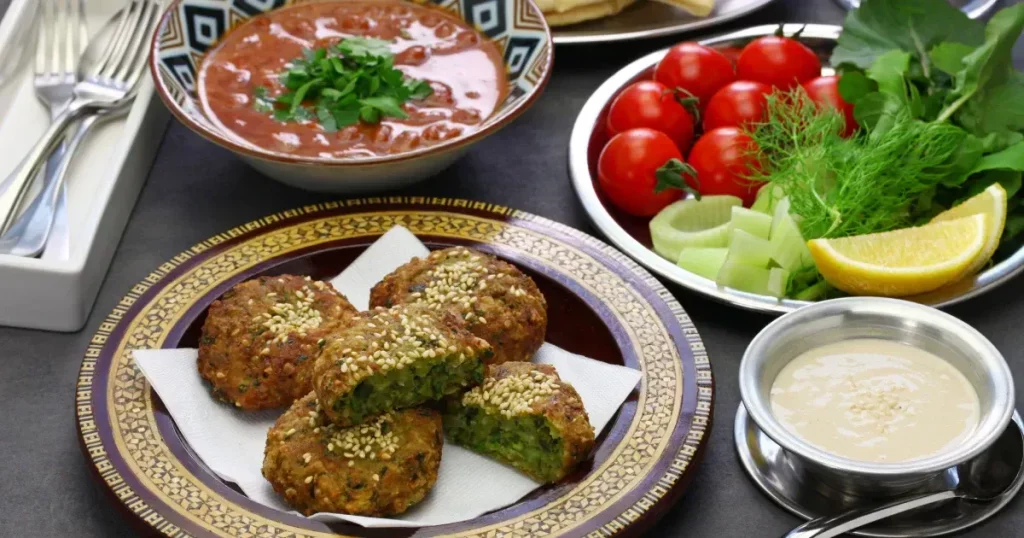
Falafel, or ta’ameya in Egyptian Arabic, is another beloved street food that has deep roots in Egyptian cuisine. Made primarily from fava beans (as opposed to chickpeas used in other regions), ta’ameya is deep-fried into crispy patties and often served in pita bread with various garnishes, such as tomatoes, pickles, and tahini sauce.
- History: It is believed that falafel originated in Egypt and was later spread throughout the Middle East.
- Where to Find It: Falafel stalls are ubiquitous in Cairo, often found near local markets and busy streets like El-Moez Street and Tahrir Square.
- Cultural Significance: A cheap, satisfying snack, falafel is a favorite for breakfast or lunch and is enjoyed by people of all ages. The dish is also popular among vegetarians and vegans.
3. Shawarma
Shawarma is a Middle Eastern classic that has been embraced by Cairo’s street food culture. It consists of thinly sliced, marinated meat (usually beef, lamb, or chicken) that’s cooked on a vertical rotisserie, then served wrapped in pita bread or flatbreads with tahini, pickles, and salad.
- History: Shawarma has Ottoman roots, but its modern form as a rotisserie dish was popularized in the Middle East, especially in Egypt.
- Where to Find It: Shawarma is widely available at street food stands throughout Cairo, particularly in areas near universities or business districts, where students and workers often stop for a quick meal.
- Cultural Significance: Shawarma reflects Cairo’s multicultural influences, combining flavors from Turkish, Levantine, and Arab culinary traditions.
4. Fattah
Fattah is a traditional Egyptian dish made with rice, bread, and meat (usually lamb or beef). It’s typically served with a rich garlic vinegar sauce and is a popular dish during celebrations, such as Eid or weddings.
- History: Fattah has pharaonic origins, dating back to the days of Ancient Egypt. It was originally prepared as a ceremonial dish for the royal court and later became a part of Egypt’s everyday cuisine.
- Where to Find It: While not as common on street corners as falafel or shawarma, fattah can be found at local eateries and street-side stalls during special occasions.
- Cultural Significance: Fattah is often served in large platters, making it a communal dish perfect for family gatherings and celebrations.
5. Sambusa (Samosas)
Sambusa, often called samosas in other parts of the world, are fried or baked pastry pockets filled with a savory mixture of vegetables, meat, or lentils. They are a popular snack during the holy month of Ramadan.
- History: The origins of sambusa can be traced to India and Persia, but the dish has been widely adopted across the Middle East and North Africa.
- Where to Find It: These crunchy treats are sold by street vendors during Ramadan, especially in the evenings just before iftar (the meal to break the fast).
- Cultural Significance: Sambusa is a food that brings people together, especially during the festive month of Ramadan. Its widespread consumption during this period highlights its deep cultural roots.
Exploring Cairo’s Food Markets
To fully appreciate the richness of Cairo’s street food, one must visit its famous food markets and street food hubs, where vendors line the streets offering a wide variety of snacks and dishes.
1. Khan El Khalili Bazaar
Located in the heart of Cairo’s historic district, Khan El Khalili is one of the city’s oldest and most famous markets. It’s a maze of narrow streets filled with spices, souvenirs, and street food stalls. Here, visitors can enjoy traditional Egyptian treats like koshari, falafel, and freshly squeezed juices.
- What to Try: Besides street food, Khan El Khalili offers a wide variety of spices, dried fruits, and handmade sweets like baklava.
- Vibe: The market is bustling with locals and tourists, providing a vibrant backdrop to a unique culinary adventure.
2. El-Moez Street
Known for its Islamic architecture, El-Moez Street is another iconic location in Cairo where street food vendors showcase the best of traditional Egyptian fare. In addition to Koshari and shawarma, visitors can also try fava beans, grilled corn, and sweet pastries.
- What to Try: Be sure to sample the ta’ameya (Egyptian falafel) and kebabs served fresh from the grill.
- Vibe: El-Moez is a lively area with a mixture of street food and historical exploration.
3. Tahrir Square
As one of the most well-known locations in Cairo, Tahrir Square is home to a variety of street food carts that cater to both locals and tourists. Here, you’ll find a fusion of traditional Egyptian cuisine and international street food trends, making it a popular food destination.
- What to Try: Shawarma, kebabs, and grilled vegetables are popular options in this busy square.
- Vibe: Tahrir Square is known for its political significance, but it’s also a great place to grab a quick bite while people-watching.
Conclusion
The street food of Cairo is an essential part of the city’s cultural fabric. It’s not just about eating; it’s about experiencing the rich diversity and history that make Egypt a unique destination for food lovers. From the comforting, hearty Koshari to the crispy, flavorful falafel, Cairo’s street food provides both locals and visitors with a chance to taste a blend of ancient traditions, modern influences, and regional diversity.
Whether you’re wandering through the vibrant streets of Khan El Khalili or enjoying a quick snack at Tahrir Square, Cairo’s street food is a gateway to understanding the city’s history, culture, and the daily life of its people. So, next time you find yourself in Egypt’s capital, don’t just visit the pyramids—make sure to savor the city’s street food, and discover the flavors that have shaped Cairo’s identity for centuries.