








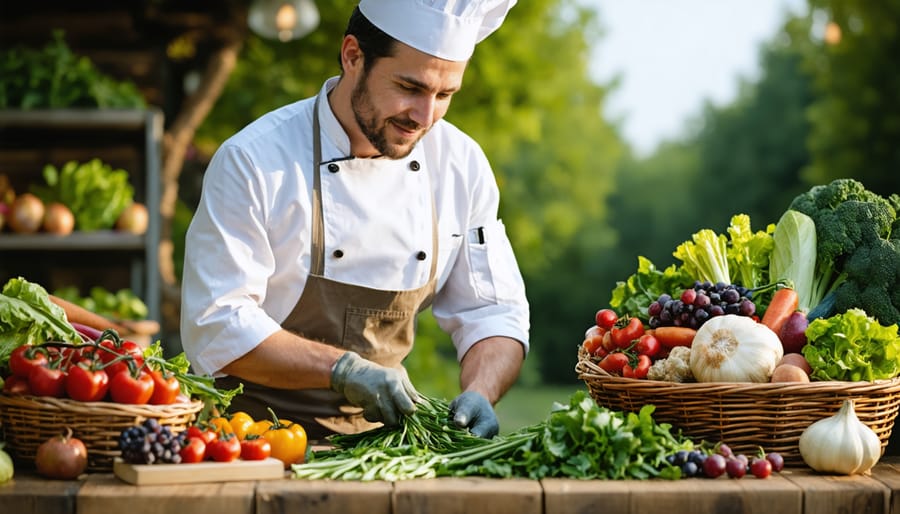

Building Resilient, Meaningful, and Place-Based Food Ecosystems
Introduction: From Transaction to Relationship
In contemporary food culture, collaboration has become more than a buzzword—it is a structural necessity. As food systems confront climate instability, supply chain fragility, cultural homogenization, and growing demands for transparency, no single actor can respond alone. Restaurants cannot innovate without producers; brands cannot localize without cultural insight; and communities cannot preserve food heritage without institutional support. In this context, collaboration with local chefs, farms, and cultural institutions emerges as a powerful strategy to align economic viability with cultural relevance and environmental responsibility.
This collaborative model marks a shift away from transactional sourcing and isolated creativity toward relational ecosystems. Chefs become interpreters of place rather than lone auteurs. Farms evolve from anonymous suppliers into co-creators. Cultural institutions—museums, archives, universities, and community organizations—act as stewards of memory, knowledge, and public trust. Together, these partnerships form networks that strengthen local food identities while remaining adaptable to contemporary demands.
This article offers a comprehensive, professional examination of why and how collaboration across culinary, agricultural, and cultural domains is reshaping the food landscape. It explores the motivations behind these partnerships, the structures that make them work, the challenges they face, and their broader implications for sustainability, equity, and cultural continuity. More than a strategy, collaboration is presented here as a new operating logic for food systems rooted in place.
1. Why Collaboration Matters Now
1.1 The Limits of Isolated Expertise
Modern food systems have long operated in silos. Chefs focused on menus, farmers on yields, and cultural institutions on preservation. While specialization brought efficiency, it also created blind spots. Culinary innovation disconnected from agriculture can strain ecosystems. Farming without cultural demand risks economic precarity. Heritage preservation without contemporary relevance can become static.
Collaboration addresses these gaps by:
- Aligning production with actual culinary needs
- Embedding cultural knowledge into everyday food practices
- Sharing risk and responsibility across sectors
In a volatile world, resilience depends on interdependence.
1.2 Shifting Consumer Expectations
Consumers increasingly expect food to be:
- Traceable and transparent
- Culturally grounded
- Ethically produced
Meeting these expectations requires more than marketing. It requires genuine relationships with the people and institutions that shape food from seed to story. Collaboration becomes the mechanism through which credibility is built and maintained.
2. Local Chefs as Cultural and Culinary Mediators
2.1 Beyond the Myth of the Lone Chef
The romantic image of the chef as a solitary genius obscures the collaborative reality of cooking. Local chefs, in particular, operate at the intersection of tradition and innovation. They draw from community knowledge, seasonal availability, and lived experience.
In collaborative ecosystems, chefs:
- Translate agricultural realities into appealing dishes
- Interpret cultural heritage for contemporary audiences
- Provide feedback loops that guide production and preservation
Their value lies not only in creativity, but in contextual intelligence.
2.2 Chefs as Interpreters of Place
Local chefs often possess an intimate understanding of regional flavor logic—how ingredients are combined, seasoned, and valued. When they collaborate with farms and cultural institutions, this knowledge becomes a shared resource rather than individual capital.
Menus developed through such collaboration tend to:
- Reflect seasonal rhythms more accurately
- Highlight underutilized local ingredients
- Preserve traditional techniques in modern formats
The result is food that feels both grounded and current.

3. Partnering with Local Farms: From Supply to Co-Creation
3.1 Rethinking the Producer–Buyer Relationship
Traditional sourcing models treat farms as interchangeable suppliers. Price and volume dominate decision-making, often at the expense of soil health, biodiversity, and farmer livelihoods. Collaborative partnerships redefine this relationship.
In a collaborative model:
- Farms and chefs plan together, sometimes seasons in advance
- Crop selection responds to culinary vision as well as agronomic logic
- Risk is shared through flexible contracts or joint experimentation
This approach transforms farming from a reactive activity into a strategic partnership.
3.2 Supporting Agricultural Diversity
Local farms are often custodians of biodiversity—growing heirloom varieties, raising heritage breeds, and maintaining ecological balance. Collaboration creates market demand for this diversity, making it economically viable.
By aligning menus with what farms can sustainably produce, food systems:
- Reduce reliance on monocultures
- Strengthen resilience to climate variability
- Preserve flavors that cannot be industrialized
Flavor diversity and ecological diversity reinforce one another.
4. Cultural Institutions as Anchors of Knowledge and Trust
4.1 Expanding the Role of Cultural Institutions
Cultural institutions are not traditionally seen as food system actors, yet they play a crucial role in preserving culinary heritage. Museums, libraries, archives, and academic institutions hold recipes, tools, oral histories, and contextual knowledge that might otherwise be lost.
When engaged in collaboration, these institutions:
- Provide historical depth to contemporary food practices
- Validate local knowledge through documentation and research
- Create public platforms for education and dialogue
They help ensure that collaboration is not only innovative, but informed.
4.2 Food as Living Heritage
Unlike static artifacts, food is a living heritage—changing with each generation. Cultural institutions that collaborate with chefs and farms help bridge the gap between preservation and practice.
Exhibitions, workshops, and public programs can:
- Connect archival knowledge with everyday cooking
- Encourage intergenerational exchange
- Prevent heritage from becoming frozen or commercialized
In this way, culture remains active rather than ornamental.
5. Models of Collaboration: Structures That Work
5.1 Project-Based Collaboration
Short-term projects—such as seasonal menus, festivals, or research initiatives—allow partners to test collaboration without long-term commitment. These projects often serve as entry points, building trust and shared language.
Benefits include:
- Flexibility
- Clear scope and goals
- Opportunities for experimentation
However, their impact may be limited without continuity.
5.2 Long-Term Strategic Partnerships
Deeper collaboration involves long-term alignment. Restaurants may commit to sourcing a significant portion of ingredients from partner farms, while cultural institutions integrate food programs into their core mission.
These partnerships:
- Enable long-term planning
- Support investment in infrastructure and skills
- Foster mutual accountability
Sustained collaboration builds systems rather than isolated successes.
6. Knowledge Exchange and Co-Learning
6.1 Horizontal Knowledge Flows
Collaboration works best when knowledge flows in multiple directions. Farmers share insights about soil and seasons; chefs share feedback on flavor and performance; cultural institutions contribute historical and social context.
This horizontal exchange:
- Breaks down hierarchies
- Encourages mutual respect
- Produces more robust solutions
Everyone becomes both teacher and learner.
6.2 Training and Capacity Building
Collaborative ecosystems often invest in training—apprenticeships, workshops, and field visits—that build shared competence. Young chefs learn about agriculture; farmers learn about culinary applications; curators learn about living food practices.
These investments strengthen the system beyond individual projects.
7. Economic Implications of Collaboration
7.1 Shared Value Creation
Collaboration shifts the economic logic from extraction to shared value. Rather than maximizing short-term profit for one actor, partnerships aim to distribute benefits more equitably.
This can include:
- Fair pricing for producers
- Stable demand for farms
- Differentiated offerings for restaurants
- Increased public engagement for institutions
Economic resilience becomes a collective outcome.
7.2 Challenges of Cost and Scale
Collaborative models often face higher costs due to smaller scale and labor intensity. Success requires:
- Transparent pricing
- Consumer education about value
- Supportive policy or funding mechanisms
Without these, collaboration risks remaining niche.
8. Sustainability Through Collaboration
8.1 Environmental Alignment
When chefs, farms, and institutions collaborate, sustainability becomes embedded rather than added on. Menus align with seasonal availability; farming practices respond to ecological feedback; cultural narratives reinforce responsible consumption.
This systemic alignment:
- Reduces waste
- Lowers emissions
- Encourages regenerative practices
Sustainability emerges as a byproduct of coherence.
8.2 Social Sustainability and Community Resilience
Collaborative food systems strengthen social ties. They keep knowledge, money, and meaning circulating locally. In times of crisis—economic, environmental, or social—these networks provide support and adaptability.
Food becomes a social infrastructure, not just a commodity.
9. Power, Ethics, and Representation
9.1 Addressing Power Imbalances
Collaboration is not automatically equitable. Differences in visibility, capital, and influence can distort partnerships. Ethical collaboration requires:
- Clear agreements
- Fair attribution and credit
- Inclusive decision-making
Especially when working with small farms or marginalized communities, power dynamics must be acknowledged and managed.
9.2 Avoiding Cultural Extraction
Cultural institutions and chefs must avoid extracting stories or traditions without reciprocal benefit. Collaboration should support communities materially and symbolically, not merely use them as inspiration.
Respectful engagement builds legitimacy and long-term trust.
10. Urban–Rural Linkages
10.1 Reconnecting Cities to Their Hinterlands
Urbanization has distanced consumers from food production. Collaboration helps rebuild these connections. Urban restaurants and institutions become conduits through which rural knowledge and products reach broader audiences.
This reconnection:
- Strengthens regional identity
- Supports rural livelihoods
- Educates urban consumers
Food becomes a bridge rather than a divide.
10.2 Logistics and Infrastructure Challenges
Urban–rural collaboration requires infrastructure—transport, storage, communication. Addressing these challenges often demands collective investment and policy support.
When successful, these systems benefit entire regions, not just individual partners.
11. The Role of Policy and Public Support
11.1 Enabling Frameworks
Public policy can either hinder or enable collaboration. Supportive measures include:
- Grants for collaborative projects
- Procurement policies favoring local partnerships
- Education programs linking food, culture, and agriculture
Policy alignment amplifies the impact of grassroots collaboration.
11.2 Public Institutions as Partners
Schools, hospitals, and public venues can participate in collaborative food systems, creating stable demand and public visibility. Their involvement normalizes collaboration as part of everyday life, not just premium experiences.
12. Technology as a Facilitator
12.1 Digital Platforms for Coordination
Technology can support collaboration through:
- Shared planning tools
- Transparent supply chain tracking
- Knowledge repositories
When used thoughtfully, digital tools reduce friction without replacing human relationships.
12.2 Storytelling and Visibility
Digital media allows collaborative projects to share stories widely, building public understanding and support. Visibility, however, should be balanced with accuracy and respect for contributors.
13. Measuring Impact Beyond Profit
13.1 New Metrics of Success
Traditional metrics—revenue, volume, growth—capture only part of collaboration’s value. Additional indicators include:
- Biodiversity supported
- Cultural knowledge preserved
- Community engagement
- Skill development
Measuring these outcomes legitimizes collaboration as a serious strategy rather than a symbolic gesture.
13.2 Learning From Failure
Not all collaborations succeed. Transparent reflection on challenges and failures is essential for system-wide learning. Failure, when shared, becomes a resource.
14. Risks and Limitations
14.1 Time and Complexity
Collaboration requires time—time to build trust, align goals, and resolve conflict. In fast-paced markets, this can be a barrier.
Recognizing collaboration as a long-term investment helps manage expectations.
14.2 Dependence and Vulnerability
Over-reliance on a small number of partners can create vulnerability. Diversification and contingency planning are necessary to balance intimacy with resilience.
15. The Future: Collaboration as Default Practice
As food systems evolve, collaboration is likely to become the norm rather than the exception. Climate pressure, cultural awareness, and consumer demand all point toward integrated approaches.
In this future:
- Chefs are community actors
- Farms are innovation partners
- Cultural institutions are living participants
Food systems become networks of care, not chains of extraction.
Conclusion: Eating Together, Working Together
Collaboration with local chefs, farms, and cultural institutions represents a profound reimagining of how food systems function. It replaces anonymity with relationship, efficiency with resilience, and novelty with meaning.
These partnerships do more than produce better food. They cultivate trust, preserve knowledge, and align human activity with ecological and cultural realities. In a world facing fragmentation and uncertainty, collaborative food systems offer a model of how diverse actors can work together without erasing difference.
Ultimately, collaboration reminds us that food is never just food. It is a shared endeavor—grown, cooked, remembered, and renewed through collective effort. By working together, we ensure that food remains not only sustenance, but a living expression of place, culture, and community.