










Introduction: When Food Meets Technology
Food has always been shaped by technology. From the invention of fire and fermentation to refrigeration and industrial agriculture, every major leap in human civilization has been accompanied by changes in how food is produced, processed, and consumed. In the 21st century, however, this relationship has entered an unprecedented phase. Food Technology—commonly known as FoodTech—is rapidly gaining momentum, driven by advances in digital systems, biotechnology, artificial intelligence, and sustainability science.
FoodTech is no longer a niche intersection of science and gastronomy. It has become a global, multidisciplinary field addressing some of the most pressing challenges of our time: population growth, climate change, resource scarcity, public health, and food security. From precision agriculture and alternative proteins to smart kitchens and AI-driven supply chains, FoodTech is transforming the entire food system—from farm to fork.
This article provides a comprehensive exploration of why FoodTech continues to heat up, how it is redefining food systems, and what its rise means for producers, consumers, and societies at large. Rather than focusing on hype alone, it examines the structural forces, technological foundations, and ethical considerations that underpin this ongoing transformation.
1. Understanding FoodTech: Scope and Definition
1.1 What Is FoodTech?
FoodTech refers to the application of technology to improve, innovate, or disrupt how food is:
- Produced
- Processed
- Distributed
- Prepared
- Consumed
It encompasses a wide range of disciplines, including agricultural science, data analytics, biotechnology, robotics, material science, and behavioral economics. Unlike traditional food science, which often focuses on safety and preservation, FoodTech adopts a systems-level perspective, aiming to optimize efficiency, sustainability, and user experience across the entire food ecosystem.
1.2 From Vertical to Horizontal Integration
One defining feature of modern FoodTech is its horizontal integration. Solutions rarely operate in isolation. A single innovation—such as a smart sensor—may simultaneously impact farming practices, logistics planning, pricing models, and waste reduction. This interconnectedness explains why FoodTech attracts interest not only from food companies, but also from tech firms, investors, policymakers, and environmental organizations.
2. Why FoodTech Is Accelerating Now
2.1 Demographic Pressure and Urbanization
The global population continues to grow, with urban areas expanding rapidly. Feeding more people with finite land and water resources requires smarter systems. FoodTech offers tools to:
- Increase yield without expanding farmland
- Reduce losses across supply chains
- Localize production in urban environments
Vertical farming, hydroponics, and controlled-environment agriculture are direct responses to these demographic realities.
2.2 Climate Change and Resource Constraints
Agriculture is both a victim of and a contributor to climate change. Extreme weather, soil degradation, and water scarcity threaten traditional farming models. FoodTech addresses these challenges through:
- Precision irrigation and fertilization
- Climate-resilient crop development
- Data-driven risk forecasting
By optimizing inputs and reducing waste, technology helps decouple food production from environmental damage.
2.3 Shifting Consumer Expectations
Modern consumers increasingly demand food that is:
- Transparent in origin
- Aligned with health goals
- Ethically and sustainably produced
FoodTech enables traceability, personalization, and accountability at scale, meeting expectations that would be difficult to fulfill through manual systems alone.
3. AgriTech: Reinventing Food Production at the Source
3.1 Precision Agriculture
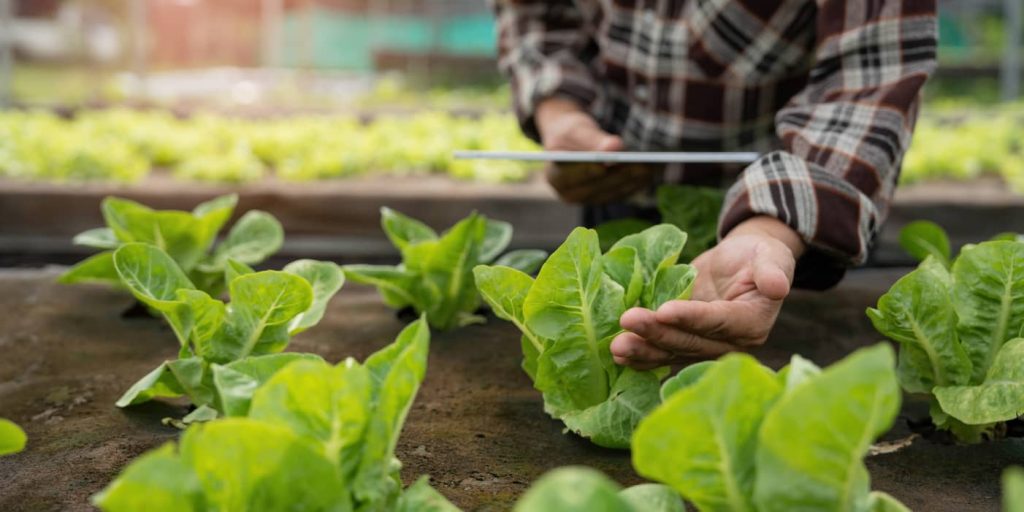
Precision agriculture uses sensors, satellite imagery, and AI to monitor crops in real time. Instead of treating entire fields uniformly, farmers can make micro-adjustments based on soil conditions, moisture levels, and plant health.
Key benefits include:
- Reduced fertilizer and pesticide use
- Higher yields with lower environmental impact
- Improved decision-making under uncertainty
This data-driven approach transforms farming from intuition-based practice into a measurable, adaptive system.
3.2 Robotics and Automation
Labor shortages and rising costs have accelerated the adoption of agricultural robots. These machines can:
- Plant seeds with millimeter accuracy
- Identify and remove weeds selectively
- Harvest crops with minimal damage
Automation not only increases efficiency but also reduces physical strain on human workers, reshaping agricultural labor structures.
4. Alternative Proteins: Redefining What We Eat
4.1 The Case for Protein Innovation
Traditional animal agriculture is resource-intensive and environmentally costly. FoodTech has responded by developing alternative protein sources, including:
- Plant-based proteins
- Cultivated (cell-based) meat
- Fermentation-derived proteins
These innovations aim to replicate the taste and texture of animal products while dramatically reducing land use, emissions, and water consumption.
4.2 Beyond Substitution
Early alternative proteins focused on mimicking meat. More recent approaches explore new culinary possibilities, designing foods that do not imitate traditional products but offer novel sensory and nutritional profiles. This shift signals a maturation of the sector—from replacement to reinvention.
5. Biotechnology and Food Innovation
5.1 Cellular Agriculture
Cellular agriculture grows animal cells directly, bypassing the need to raise and slaughter animals. While still facing scalability and regulatory challenges, this technology has the potential to:
- Reduce ethical concerns
- Minimize disease risks
- Offer controlled nutritional composition
Its development represents one of the most radical reimaginings of food production in human history.
5.2 Microbial and Enzymatic Solutions
Microorganisms are increasingly used to produce flavors, fats, vitamins, and functional ingredients. Fermentation technologies allow companies to:
- Create consistent, high-quality inputs
- Reduce dependence on volatile agricultural supply chains
- Customize functionality for specific food applications
These invisible technologies quietly reshape what food is made of, without altering how it feels to eat.
6. Digital Supply Chains and Smart Logistics
6.1 Transparency and Traceability
Blockchain and digital tracking systems allow food products to be traced from origin to consumer. This improves:
- Food safety
- Recall efficiency
- Consumer trust
Traceability also empowers ethical consumption by making sourcing practices visible.
6.2 Reducing Food Waste
An estimated one-third of all food produced globally is wasted. FoodTech addresses this through:
- Demand forecasting algorithms
- Dynamic pricing models
- Smart inventory management
By aligning supply more closely with demand, technology reduces both economic loss and environmental impact.
7. FoodTech in Processing and Manufacturing
7.1 Smart Factories
Food manufacturing is becoming increasingly automated and data-driven. Smart factories use sensors and AI to:
- Monitor quality in real time
- Optimize energy use
- Predict equipment failures
These systems improve consistency while reducing downtime and waste.
7.2 Customization at Scale
Advanced processing technologies allow for mass customization—adjusting nutritional content, portion size, or flavor profiles without sacrificing efficiency. This capability supports personalized nutrition, a growing frontier in FoodTech.
8. The Rise of Personalized Nutrition
8.1 Data-Driven Diets
Personalized nutrition uses data such as genetics, microbiome composition, and lifestyle factors to tailor dietary recommendations. FoodTech platforms analyze this data to suggest:
- Specific foods
- Meal plans
- Supplement strategies
The goal is to move beyond one-size-fits-all guidelines toward individualized health optimization.
8.2 Ethical and Privacy Considerations
While promising, personalized nutrition raises concerns about data privacy, accessibility, and scientific validity. Responsible FoodTech development must balance innovation with transparency and consumer protection.
9. The Consumer Interface: How People Experience FoodTech
9.1 Smart Kitchens and Connected Appliances
FoodTech extends into homes through:
- Smart refrigerators that track freshness
- Cooking devices with automated programs
- Apps that reduce food waste
These tools integrate food management into daily digital life, changing habits subtly but significantly.
9.2 Delivery Platforms and the Platform Economy
Online food delivery and meal-kit services rely heavily on algorithms, logistics optimization, and data analytics. While they increase convenience, they also reshape labor models and urban food access, raising important social questions.
10. Investment, Startups, and the FoodTech Ecosystem
10.1 Venture Capital and Innovation Cycles
FoodTech has attracted substantial investment due to its scale and relevance. Startups operate across the value chain, often collaborating with established food companies to:
- Pilot new technologies
- Accelerate market entry
- Share risk
This hybrid ecosystem blends agility with experience.
10.2 The Challenge of Scaling
Unlike software, food is physical. Scaling FoodTech innovations requires:
- Infrastructure investment
- Regulatory approval
- Consumer acceptance
Success depends not only on technological feasibility but also on economic and cultural fit.
11. Regulation, Safety, and Public Trust
11.1 Navigating Regulatory Frameworks
FoodTech innovations often outpace regulation. Policymakers face the challenge of:
- Ensuring safety without stifling innovation
- Updating standards for novel foods
- Coordinating internationally
Clear, science-based regulation is essential for public trust.
11.2 Communicating Science to Consumers
Technological food solutions can provoke skepticism. Transparent communication—about benefits, risks, and limitations—is crucial to avoid misinformation and polarization.
12. Equity, Access, and the Risk of Technological Divide
12.1 Who Benefits from FoodTech?
While FoodTech promises efficiency and sustainability, it risks exacerbating inequality if access is limited to wealthy regions or consumers. Addressing this requires:
- Inclusive design
- Public–private partnerships
- Policy support for small producers
12.2 Technology as Tool, Not Replacement
FoodTech should complement, not erase, traditional food knowledge. Indigenous practices, small-scale farming, and cultural foodways offer resilience that technology alone cannot replicate.
13. Cultural Implications of a Technological Food System
13.1 Redefining “Natural”
As technology becomes more embedded in food production, definitions of “natural” evolve. The focus shifts from how food is made to what impact it has—on health, environment, and society.
13.2 Preserving Meaning in a High-Tech World
Food is not just fuel. It carries memory, identity, and ritual. Successful FoodTech respects these dimensions, enhancing convenience and sustainability without stripping food of its cultural richness.
Conclusion: FoodTech as a Long-Term Transformation
The continued rise of FoodTech is not a passing trend—it is a structural response to global challenges and changing values. By integrating technology into every layer of the food system, societies gain tools to produce food more efficiently, distribute it more fairly, and consume it more consciously.
Yet technology alone is not a solution. The future of FoodTech depends on intentional design, ethical governance, and cultural sensitivity. When guided by these principles, FoodTech has the potential not only to feed the world, but to do so in ways that are healthier, more sustainable, and more humane.
In the end, the true measure of FoodTech’s success will not be how advanced it becomes, but how well it serves a simple goal that has defined humanity since its beginnings: ensuring that food remains a source of nourishment, security, and shared meaning in an increasingly complex world.