









Three Pillars Shaping the Next Food System
Introduction: Engineering the Future of Food
The global food system is under unprecedented pressure. Population growth, climate volatility, resource scarcity, biodiversity loss, and public health challenges are converging to test the limits of traditional agriculture and animal farming. In response, a new technological paradigm is taking shape—one that does not merely optimize existing systems, but reimagines how food itself is produced.
At the heart of this transformation stand three interrelated innovations:
- Cultivated meat (also known as lab-grown or cell-based meat)
- Precision fermentation, using microorganisms as programmable factories
- Smart agriculture, powered by data, automation, and artificial intelligence
Together, these technologies represent a shift from extractive, land-intensive food production toward controlled, knowledge-driven, and adaptive systems. They do not operate in isolation. Instead, they form a complementary triad that spans the entire food value chain—from cellular biology to microbial engineering to digital field management.
This article offers a comprehensive, professional examination of these three pillars. It explores their scientific foundations, technological maturity, economic implications, ethical debates, and long-term potential. Rather than treating them as speculative futures, it positions them as emerging infrastructures that are already reshaping how humanity thinks about food.
1. Cultivated Meat: Rethinking Animal Protein at the Cellular Level
1.1 What Is Cultivated Meat?
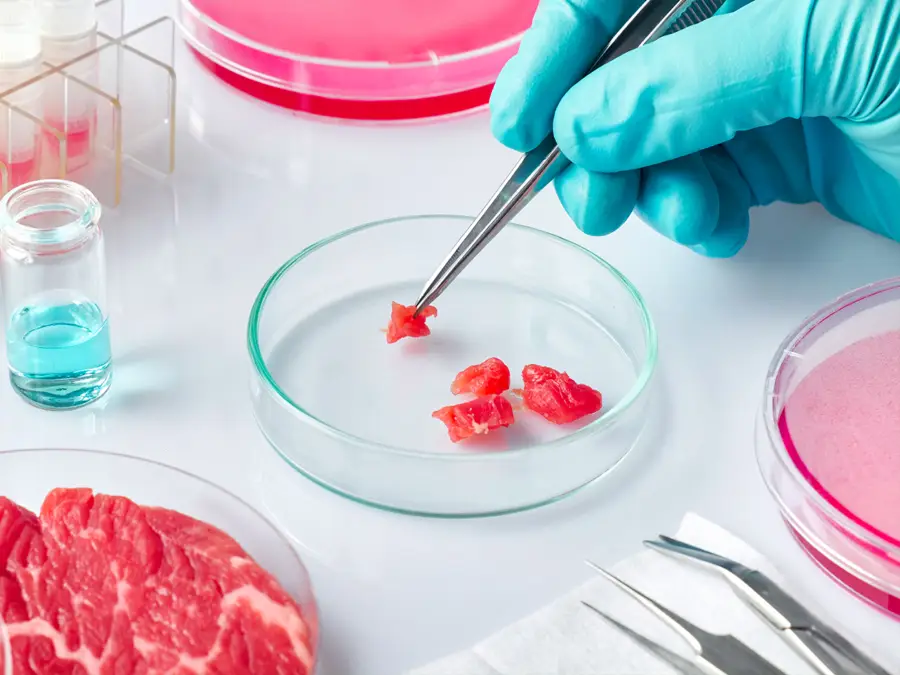
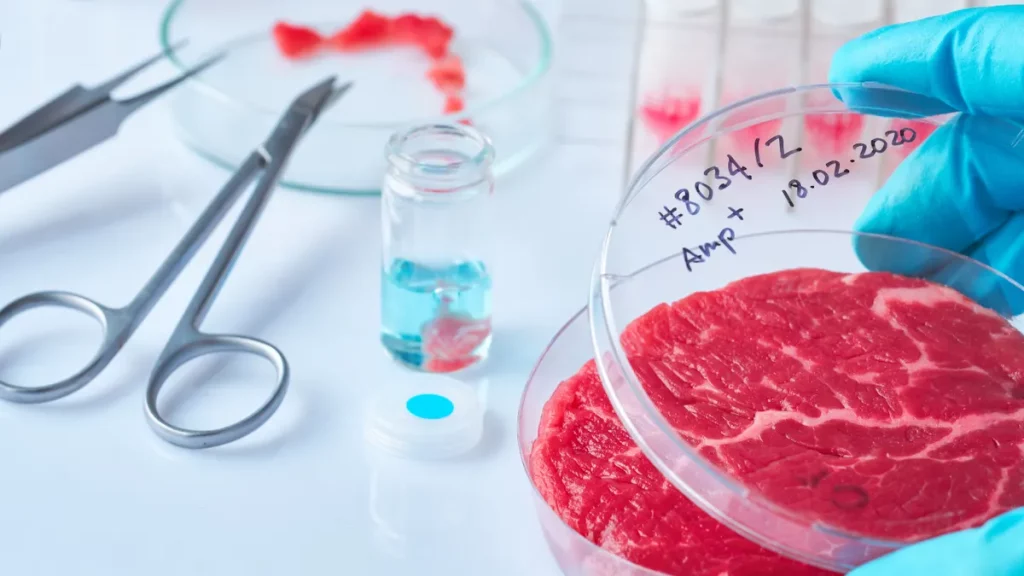
Cultivated meat is produced by growing animal cells directly, without raising or slaughtering animals. The process begins with a small sample of animal cells—typically muscle stem cells—which are then proliferated in a controlled environment known as a bioreactor. With the right nutrients, growth factors, and conditions, these cells multiply and differentiate into muscle tissue.
The result is biologically identical to conventional meat at the cellular level, but produced through cellular agriculture rather than livestock farming.
1.2 Why Cultivated Meat Matters
Traditional animal agriculture is resource-intensive. It requires vast amounts of land, water, and feed, while contributing significantly to greenhouse gas emissions. Cultivated meat offers a potential alternative by:
- Reducing land and water use
- Lowering emissions associated with livestock
- Minimizing antibiotic use
- Improving food safety through controlled production
Beyond environmental considerations, cultivated meat addresses ethical concerns by decoupling meat consumption from animal slaughter.
1.3 The Science Behind the Process
Producing cultivated meat involves several key components:
- Cell lines: Stable, high-performing animal cells capable of long-term growth
- Growth media: Nutrient-rich solutions that replace the animal’s internal biology
- Scaffolds: Structures that guide cells into forming three-dimensional tissue
- Bioreactors: Vessels that provide precise control over temperature, oxygen, and nutrient flow
Each component requires advanced bioengineering and rigorous quality control. Progress in any one area—such as reducing the cost of growth media—can dramatically improve overall feasibility.
1.4 Technical and Economic Challenges
Despite its promise, cultivated meat faces substantial hurdles:
- Scaling: Growing cells efficiently at industrial volumes remains complex
- Cost: Production costs are still higher than conventional meat
- Texture and complexity: Replicating whole cuts with fat, connective tissue, and structure is challenging
- Regulation and acceptance: Clear frameworks and consumer trust are essential
As a result, most early cultivated meat products focus on ground or processed formats rather than steaks or chops.
1.5 Long-Term Implications
If successfully scaled, cultivated meat could fundamentally alter protein supply chains. Slaughterhouses may be replaced by biomanufacturing facilities, and meat production could move closer to urban centers. This transition would redefine not only agriculture, but also rural economies, labor structures, and cultural relationships with animals.
2. Precision Fermentation: Programming Microbes to Make Food
2.1 From Ancient Fermentation to Precision Biology
Fermentation is one of humanity’s oldest food technologies. Bread, cheese, yogurt, and beer all rely on microorganisms. Precision fermentation, however, represents a leap forward: it uses genetically programmed microbes to produce specific functional ingredients with high efficiency and consistency.
Instead of relying on naturally occurring metabolic pathways alone, scientists design microorganisms to produce targeted outputs—proteins, fats, enzymes, or flavor compounds—at industrial scale.
2.2 How Precision Fermentation Works
The process typically involves:
- Identifying a target molecule (for example, a dairy protein)
- Encoding the genetic instructions for that molecule into a microorganism (such as yeast or fungi)
- Feeding the microorganism sugars and nutrients in a bioreactor
- Harvesting and purifying the desired product
The final ingredient is chemically identical to its conventional counterpart, but produced without animals or large-scale farming.
2.3 Applications in the Food System
Precision fermentation is already influencing multiple food categories:
- Dairy alternatives: Producing milk proteins without cows
- Egg substitutes: Creating functional egg proteins for baking
- Fats and oils: Engineering tailored lipid profiles
- Flavor and aroma compounds: Enhancing taste without synthetic additives
Because these ingredients integrate seamlessly into existing food formulations, precision fermentation often operates invisibly, reshaping products without altering consumer habits.
2.4 Advantages Over Traditional Production
Precision fermentation offers several systemic benefits:
- Efficiency: Microbes convert feedstock into protein far more efficiently than animals
- Consistency: Controlled environments reduce variability
- Scalability: Production can be expanded without proportional land use
- Customization: Nutritional and functional properties can be fine-tuned
These advantages make precision fermentation particularly attractive to food manufacturers seeking stable supply chains.
2.5 Challenges and Public Perception
Despite its technical maturity, precision fermentation faces challenges:
- Regulatory clarity: Approval processes differ across regions
- Energy use: Bioreactors require electricity, linking sustainability to energy sources
- Consumer understanding: The concept can be misunderstood or conflated with artificiality
Clear communication and transparent labeling are essential to building trust.
3. Smart Agriculture: Digitizing the Field
3.1 Defining Smart Agriculture
Smart agriculture—also known as digital or precision agriculture—applies advanced technologies to farming practices. These include:
- Sensors and Internet of Things (IoT) devices
- Satellite imagery and drones
- Artificial intelligence and machine learning
- Robotics and automation
The goal is to optimize decision-making by collecting and analyzing real-time data about crops, soil, weather, and resources.
3.2 Data-Driven Farming Decisions
Traditional farming often relies on experience and averages. Smart agriculture replaces uniform treatment with targeted intervention. For example:
- Water is applied only where moisture is lacking
- Fertilizer is adjusted based on nutrient levels
- Pests are identified early through image recognition
This precision reduces waste while improving yield and resilience.
3.3 Automation and Robotics
Robotic systems are increasingly used for:
- Planting and harvesting
- Weeding without herbicides
- Monitoring crop health
Automation addresses labor shortages and reduces physical strain, while improving consistency and timing.
3.4 Climate Resilience and Adaptation
As climate patterns become less predictable, smart agriculture provides tools for adaptation:
- Predictive models anticipate extreme weather
- Sensors detect stress before damage becomes visible
- Data platforms enable rapid response
These capabilities are crucial for maintaining food security under changing conditions.
3.5 Barriers to Adoption
Smart agriculture is not without limitations:
- High upfront costs
- Digital literacy gaps
- Infrastructure requirements, especially in rural areas
Ensuring equitable access to these tools is a central policy challenge.
4. How the Three Technologies Interconnect
4.1 Complementary, Not Competing
Cultivated meat, precision fermentation, and smart agriculture address different layers of the food system:
- Cultivated meat redefines animal protein
- Precision fermentation reimagines ingredient production
- Smart agriculture optimizes plant-based and conventional farming
Rather than replacing one another, they form an integrated ecosystem.
4.2 Shared Infrastructure and Knowledge
All three rely on:
- Data analytics and modeling
- Controlled environments
- Advanced bioprocessing
- Systems engineering
Advances in one domain often accelerate progress in others, creating positive feedback loops.
5. Economic and Industrial Implications
5.1 New Supply Chains
These technologies shift food production from land-based systems to:
- Biomanufacturing facilities
- Digital platforms
- Decentralized production hubs
This transformation alters logistics, employment patterns, and investment flows.
5.2 Investment and Innovation Ecosystems
The convergence of biology and technology has attracted significant investment. Startups, established food companies, and research institutions collaborate to de-risk innovation and accelerate commercialization.
However, scaling remains capital-intensive, requiring long-term commitment rather than short-term returns.
6. Ethical, Social, and Cultural Considerations
6.1 Redefining “Natural”
As food becomes more engineered, traditional definitions of “natural” are challenged. The debate increasingly shifts from production method to outcome-based evaluation: environmental impact, health effects, and social benefit.
6.2 Cultural Identity and Food Traditions
Food carries deep cultural meaning. Integrating new technologies requires sensitivity to local traditions and values. Successful adoption depends not only on technical success, but on cultural resonance.
6.3 Equity and Access
There is a risk that advanced food technologies benefit primarily wealthy regions. Ensuring global access requires:
- Policy support
- Knowledge sharing
- Inclusive business models
7. Regulation and Governance
7.1 Keeping Pace with Innovation
Regulatory frameworks must evolve to address novel production methods while ensuring safety and transparency. Clear standards are essential for market confidence.
7.2 International Coordination
Because food systems are global, regulatory fragmentation can slow progress. Harmonization of standards will be critical for scaling these technologies responsibly.
8. The Long-Term Vision: A Hybrid Food System
The future is unlikely to be dominated by a single solution. Instead, a hybrid food system is emerging—one that combines:
- High-tech protein production
- Digitally enhanced farming
- Traditional practices adapted through technology
This pluralistic model offers resilience, flexibility, and choice.
Conclusion: From Experimentation to Infrastructure
Cultivated meat, precision fermentation, and smart agriculture are no longer speculative experiments. They are evolving into foundational infrastructures that redefine how food is produced, distributed, and understood.
Their true significance lies not only in technological novelty, but in their potential to align food systems with the realities of the 21st century—environmental limits, ethical concerns, and social complexity. When guided by responsible governance and cultural awareness, these technologies offer more than efficiency. They offer a pathway toward a food system that is more sustainable, more resilient, and more intentional.
In this sense, the rise of these three pillars marks not just a technological shift, but a rethinking of humanity’s relationship with food itself.