










Introduction: The Intersection of Art and Science in Modern Cuisine
The culinary world is undergoing a profound transformation, where the lines between fine dining restaurants and food laboratories are increasingly difficult to distinguish. What was once the realm of culinary artistry—focused on flavor, presentation, and tradition—is now deeply influenced by cutting-edge science and technology. Chefs, scientists, and food innovators are working together to push the boundaries of what food can be, merging gastronomy with technology, and creating new possibilities for taste, texture, and experience.
This blending of disciplines is not just about new cooking techniques but also about rethinking the entire food experience. The evolution of molecular gastronomy in particular has played a significant role in breaking down the barriers between the kitchen and the laboratory, encouraging a more experimental approach to cooking and food development. With the advent of food labs and the growing role of scientific methods in culinary creation, fine dining is no longer solely about traditional recipes and craftsmanship; it’s about scientific innovation, exploration, and the pursuit of novel food experiences.
This article delves into the growing convergence between fine dining and food labs, exploring the history, trends, and implications of this phenomenon. We will examine how technology, experimentation, and science have impacted the culinary world, highlighting notable examples and discussing the future of food innovation.
Section I — The Evolution of Fine Dining and the Rise of Culinary Science
A Brief History of Fine Dining
Fine dining has long been regarded as the pinnacle of culinary art. From the extravagant feasts of the medieval period to the refined haute cuisine of French culinary tradition, the concept of fine dining has evolved alongside culture, society, and technological advancements. Early fine dining was focused on luxury, presentation, and extravagant flavors, often catering to the elite.
By the 20th century, renowned chefs such as Auguste Escoffier revolutionized restaurant cuisine with more structured culinary techniques and a focus on professional service standards. The Michelin Guide, established in 1900, further solidified fine dining’s place in modern culture, elevating chefs to celebrity status and transforming the restaurant industry into an international art form.
The Emergence of Molecular Gastronomy
In the late 20th century, chefs began to experiment with new ingredients, techniques, and technologies. The term molecular gastronomy, coined by scientists Hervé This and Nicolas Kurti, referred to the study of the physical and chemical processes that occur during cooking. This was not just a new trend but an entirely new philosophy of cooking—where chefs used scientific principles to manipulate food’s properties and create new textures, flavors, and presentations.
Chefs like Ferran Adrià at El Bulli, Heston Blumenthal at The Fat Duck, and Grant Achatz at Alinea embraced molecular gastronomy to create food experiences that were as much about sensory stimulation and surprise as they were about flavor. Techniques such as liquid nitrogen freezing, spherification, and foams began to transform traditional cooking methods into scientifically-driven culinary expressions.
Food Laboratories: A New Frontier in Food Development
As culinary science gained popularity, the idea of food laboratories—places dedicated to researching and developing new food products and technologies—emerged. These labs are not simply places for food experimentation, but hubs where chefs, scientists, and innovators come together to push the boundaries of flavor, nutrition, and food experience. Institutions such as The Culinary Institute of America, Harvard’s Science and Cooking Program, and The Experimental Cuisine Collective have played critical roles in bridging the gap between culinary arts and food science.
Food labs often use sophisticated tools such as spectrometers, chromatographs, and microscopes to analyze food on a molecular level. This allows for precision cooking—where each element of a dish is meticulously crafted based on scientific understanding of its properties. In this environment, chefs are not just artists; they are also scientists conducting experiments to create new flavors, textures, and forms of food that challenge our perceptions of what cuisine can be.
Section II — The Science of Cooking: Techniques and Innovations
1. Molecular Gastronomy Techniques
Molecular gastronomy has introduced many groundbreaking techniques to the culinary world, which have been adopted both in fine dining and food labs. Some of the most notable techniques include:
- Spherification: A technique where liquids are turned into spheres that burst in your mouth, often used for making “caviar” from fruit juices or cocktails.
- Foams and Emulsions: Using molecular manipulation to create stable foams (such as foam-based sauces or drinks), often to alter the texture and mouthfeel of foods.
- Liquid Nitrogen Freezing: Used for rapid freezing of ingredients to create ice creams, sorbets, or desserts with unique textures and instant freezes.
- Sous-Vide Cooking: A method where food is sealed in plastic and cooked in water at low, consistent temperatures, allowing for perfect cooking precision.
- Fermentation and Culturing: In food labs, scientists experiment with new fermentation techniques to create new flavors, probiotics, and health benefits in foods such as fermented beverages, plant-based proteins, and cheeses.
2. Biotechnology and Genetic Engineering
In addition to traditional molecular techniques, biotechnology has become an important part of food labs. Through genetic engineering and synthetic biology, researchers can create new food products with enhanced nutritional profiles, better flavors, and longer shelf lives. Some examples of how biotechnology is influencing fine dining include:
- Lab-Grown Meat: Cultured meats produced through cellular agriculture are providing a more sustainable, ethical, and environmentally friendly alternative to traditional animal farming.
- CRISPR-Cas9: The use of gene-editing technology allows scientists to modify the genetic code of plants and animals, creating disease-resistant crops or high-protein foods that can withstand climate change.
- Food Printing: 3D printing technologies are allowing for the creation of intricate, customizable food structures, offering exciting opportunities in personalized nutrition and design.
3. The Role of Artificial Intelligence and Data Science
In recent years, artificial intelligence (AI) and machine learning have begun to play a role in food science. Using algorithms, data scientists and chefs can predict flavor combinations, optimize cooking processes, and identify novel ingredients that complement existing dishes. In food labs, AI is used to analyze large datasets of food ingredients and their interactions to suggest new combinations, cooking techniques, and product formulations.
Some notable uses of AI in fine dining and food labs include:
- Flavor Prediction: AI programs can predict how certain spices or ingredients will interact, helping chefs discover new and exciting flavors.
- Nutritional Optimization: Using AI to create dishes that are both delicious and nutritionally balanced, tailored to individual health needs and preferences.
- Automated Cooking Systems: Robots and AI-driven systems can perform repetitive cooking tasks, increasing precision and consistency while allowing chefs to focus on creativity.
Section III — Fine Dining Restaurants as Laboratories for Innovation
1. Pushing the Limits of Dining Experiences
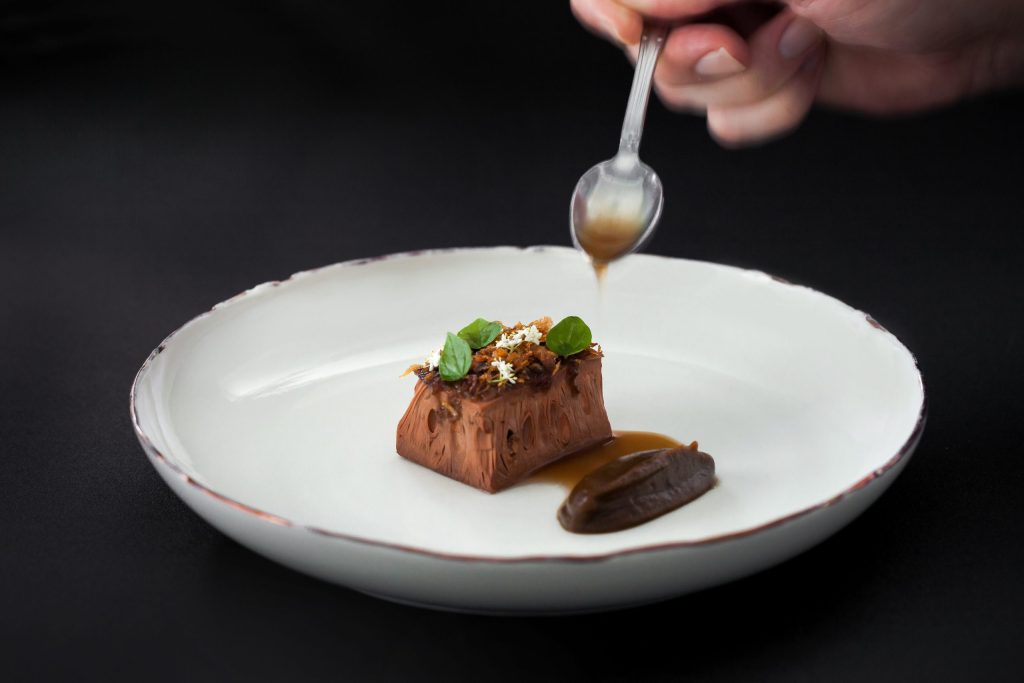
Fine dining restaurants are increasingly reminiscent of laboratories, where chefs test new ideas, combine unexpected ingredients, and create food experiences that are as much about science as they are about flavor. For example:
- Alinea in Chicago is known for its avant-garde dishes that incorporate molecular gastronomy techniques to create surprising, multi-sensory dining experiences.
- The Fat Duck in the UK offers a “Sound of the Sea” dish where diners listen to ocean sounds while eating a seafood platter, blending audio-visual stimuli with taste and texture.
- El Celler de Can Roca in Spain uses cutting-edge technology to enhance the sensory experiences of its guests, incorporating digital media and flavor manipulation.
These restaurants are increasingly operating like culinary laboratories, where chefs are not only concerned with taste but with creating innovative food experiences that engage all the senses.
2. The Role of Technology in Fine Dining
The use of technology in fine dining is no longer limited to cooking equipment; it extends to the entire dining experience. Technology allows chefs to fine-tune every element of a dish, from ingredient sourcing and preparation methods to plating and presentation. In some cases, technology is used to enhance personalized dining, where data is collected about guests’ preferences, allergies, and health concerns, allowing for customized menus and a more individualized experience.
Some examples of technology-enhanced fine dining include:
- Interactive Menus: Digital tablets or augmented reality (AR) devices are used to present information about each dish, including its origin, cooking method, and flavor profile.
- Automated Plating Systems: Precision plating robots allow for the consistent presentation of complex dishes, ensuring perfect portions and visual appeal.
- Smart Glassware: Specialized glasses with sensors to measure and optimize wine pairings based on the wine’s temperature, oxidation levels, and other factors.
Section IV — The Future of Fine Dining and Food Labs
1. Collaboration Between Chefs and Scientists
The future of fine dining is likely to see an even greater merging of disciplines. As chefs collaborate more closely with scientists, nutritionists, and engineers, the possibilities for food innovation will expand exponentially. The use of food labs in this context will not be limited to the development of new ingredients and techniques but will also involve the creation of new dining formats, personalized menus, and sustainable food systems.
2. Sustainability and the Circular Food System
With increasing awareness of environmental issues and food waste, fine dining restaurants and food labs will continue to embrace sustainability. In the future, chefs may focus more on creating zero-waste menus, using sustainable ingredients, and reducing carbon footprints by sourcing food locally and seasonally. The circular food economy, which minimizes waste by recycling food scraps, will be a significant component of both fine dining and food lab innovations.
3. Consumer Engagement and Ethical Food Choices
As food labs and fine dining establishments become more integrated, consumer engagement will grow. Diners will not only have access to unique food experiences but also to information about the ethical and environmental implications of their meals. There is a growing interest in plant-based innovations, lab-grown proteins, and other ethical food choices that will shape the future of dining.
Conclusion: The Fusion of Art and Science
The blurring of boundaries between fine dining restaurants and food laboratories represents a revolution in the culinary world. Chefs are no longer just artists; they are scientists, pushing the limits of what food can be. The future of fine dining will be shaped by innovation, sustainability, and the continual integration of culinary science. As restaurants continue to embrace technology and experiment with new techniques, the food industry will move into an era where creativity and science work in tandem to deliver unforgettable, cutting-edge experiences.