









Introduction: Culinary Heritage Across Asia
Asian cuisine is a mosaic of flavors, techniques, and traditions, reflecting millennia of cultural exchange, environmental adaptation, and social evolution. Among the most iconic dishes are Japanese sushi, Thai Tom Yum, and Indian curry—each representing a distinct culinary philosophy, rooted in local ingredients, climate, and historical context.
Despite their global popularity, these dishes are much more than recipes: they are cultural artifacts, tracing trade routes, colonial encounters, agricultural innovations, and religious practices. Understanding their origins and evolution provides insight into the complex interplay of tradition, adaptation, and globalization in Asian cuisine.
This article explores the historical development, regional variations, culinary techniques, and contemporary significance of sushi, Tom Yum, and curry, highlighting how each dish reflects identity, geography, and innovation.
Section I — Japanese Sushi: From Preservation to Culinary Art
1. Origins and Early History
Sushi’s origins date back over a thousand years, with roots in southeast Asian fermentation practices:
- Narezushi, the earliest form, involved fermenting fish with rice for preservation. Only the fish was consumed, while the rice was discarded.
- This technique arrived in Japan around the 8th century, adapting local rice varieties and fish species.
- Narezushi was primarily functional, ensuring protein availability during periods without refrigeration.
2. Evolution Through Centuries
By the Edo period (17th–19th centuries), sushi evolved dramatically:
- Edomae Sushi: Originating in Tokyo (formerly Edo), this form emphasized fresh fish atop seasoned rice.
- Innovations included the use of vinegar to season rice, reducing fermentation time while enhancing flavor.
- Street vendors popularized sushi as a fast, accessible meal, shifting it from preservation to gastronomy.
3. Regional Variations and Techniques
Japan’s diverse regions influenced sushi styles:
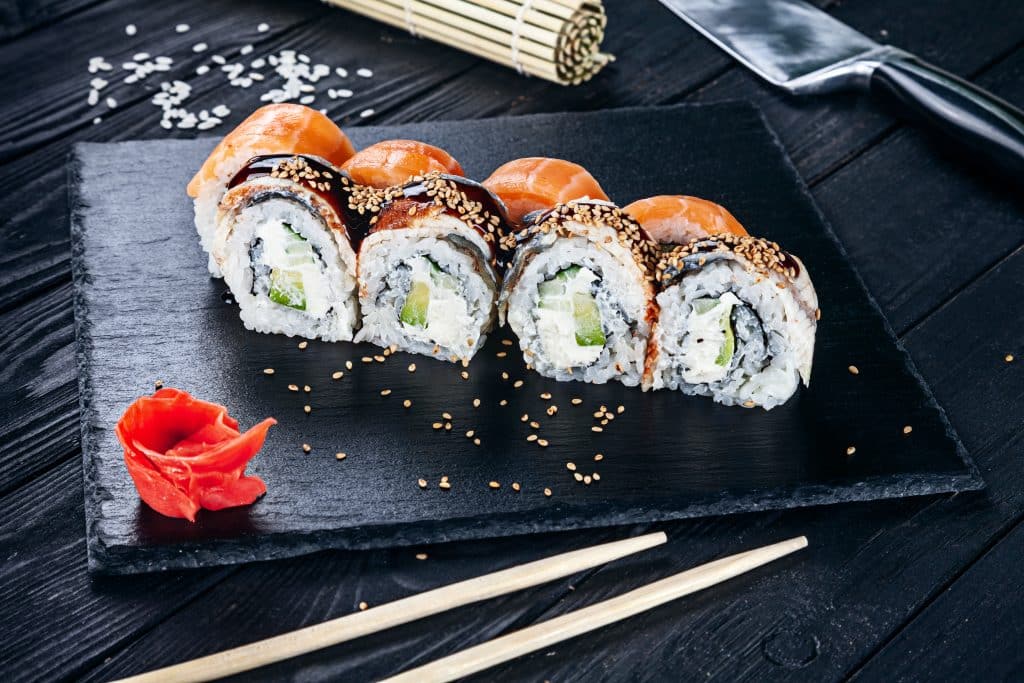
- Nigiri: Hand-pressed rice with fish, emblematic of Edo/Tokyo.
- Maki Rolls: Seaweed-wrapped sushi, often with multiple ingredients, reflecting creative layering techniques.
- Chirashi: Scattered sushi bowl, popular in Kansai, emphasizing variety and seasonal ingredients.
4. Contemporary Sushi
Modern sushi blends tradition with innovation:
- Global sushi incorporates ingredients like avocado, cream cheese, and tropical fish, adapting to local tastes.
- High-end sushi maintains seasonality, craftsmanship, and minimalist presentation, reflecting Japanese aesthetics and culinary philosophy.
Section II — Thai Tom Yum: Spicy-Sour Identity of Siam
1. Historical Roots
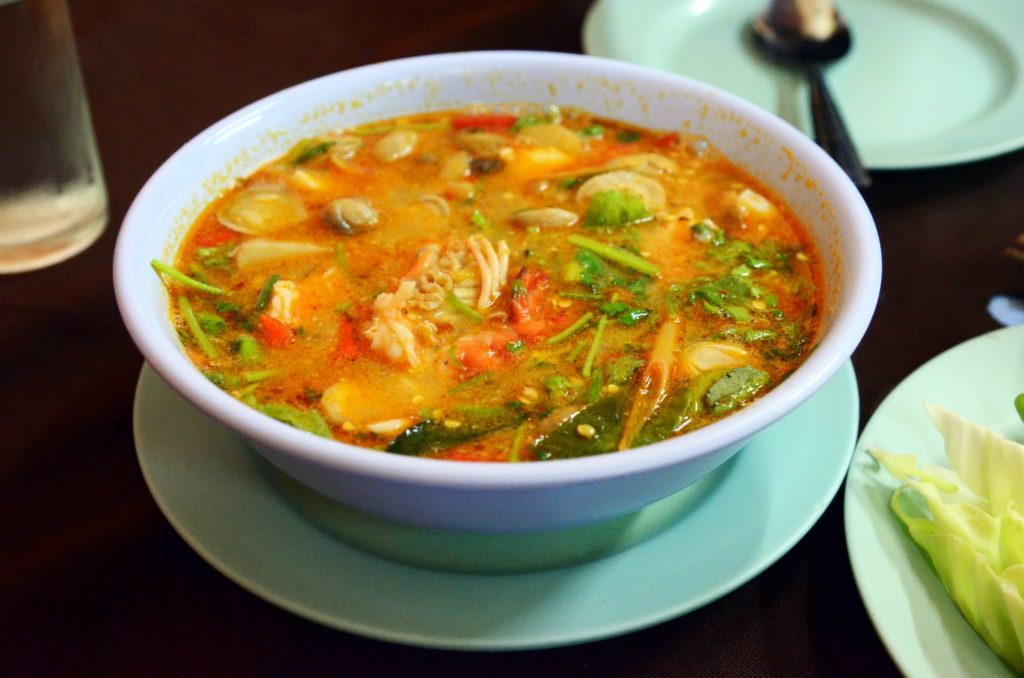
Tom Yum, the famous hot and sour soup, has origins in central Thailand, shaped by local ingredients, climate, and medicinal beliefs:
- Early Thai cuisine utilized lemongrass, galangal, kaffir lime leaves, and chili, herbs with both flavor and health properties.
- The dish emerged as a light, aromatic soup suitable for tropical climates and abundant freshwater fish.
- Influences from Chinese and Indian traders introduced techniques such as stir-frying, seasoning with fish sauce, and incorporating tamarind.
2. Evolution of Flavor Profiles
Tom Yum’s distinctive hot-sour balance reflects careful ingredient pairing:
- Sourness: Tamarind, lime juice, or bilimbi.
- Spiciness: Fresh chilies, galangal.
- Aromatic freshness: Lemongrass, kaffir lime leaves.
- Umami depth: Fish sauce and occasionally shrimp paste.
Regional adaptation led to variations:
- Tom Yum Goong: Featuring prawns, popular in Bangkok and coastal areas.
- Tom Yum Talay: Incorporating mixed seafood in southern regions.
- Vegetarian versions: Reflect Buddhist dietary restrictions in northern Thailand.
3. Culinary Techniques and Cultural Context
Preparation emphasizes:
- Rapid cooking to preserve aromatic compounds.
- Layering flavors: Balance between sour, spicy, salty, and sweet.
- Medicinal philosophy: Ingredients often serve both culinary and therapeutic purposes.
Tom Yum exemplifies how local ecology and cultural beliefs shape a dish beyond taste alone.
Section III — Indian Curry: Spices, Diversity, and History
1. Origins and Early Development
Curry’s origin is deeply intertwined with Indian agriculture, spice trade, and cultural diversity:
- The word “curry” derives from Tamil word “kari”, meaning sauce or spiced gravy.
- Early Indian dishes combined legumes, vegetables, rice, and native spices to create flavorful, nutritious meals.
- Trade with Persians, Arabs, and later Europeans introduced new spices, cooking oils, and ingredients, enriching the complexity of curries.
2. Regional Variations
India’s diverse geography and cultures produced distinct curry traditions:
- North India: Creamy, dairy-based curries (e.g., Butter Chicken, Paneer Makhani) using ghee, yogurt, and nuts.
- South India: Coconut milk and tamarind-based curries, emphasizing tangy, spicy flavors, with staples like Sambar and Chettinad curry.
- Eastern India: Mustard oil and seafood, reflecting riverine and coastal ecology.
- Western India: Coconut, peanuts, and robust spices, blending maritime trade influences with local produce.
3. Techniques and Spice Blending
Indian curries rely on layered spice profiles (masalas):
- Dry roasting spices: Enhances aroma and depth.
- Tempering (tadka): Infuses oil with spices for flavor transfer.
- Simmering with liquids: Balances heat and integrates ingredients.
Spices like cumin, coriander, turmeric, cardamom, and chili are selected for regional availability and medicinal properties.
4. Colonial and Global Influence
Colonial history shaped curry evolution:
- British colonialism introduced curry to Europe, adapting it with cream, potatoes, or less intense spices.
- Indian diaspora created regional variations abroad (e.g., South African curry, Caribbean curry), blending local ingredients with traditional techniques.
Section IV — Comparative Analysis: Sushi, Tom Yum, and Curry
1. Ingredient Adaptation and Local Ecology
All three dishes illustrate how local ingredients drive culinary evolution:
- Sushi relies on freshwater and marine fish, rice, and seaweed.
- Tom Yum integrates tropical herbs, freshwater prawns, and aromatic spices.
- Curry emphasizes grains, legumes, spices, and regional produce.
2. Cultural Philosophy and Dining Practices
- Sushi reflects Japanese minimalism, seasonality, and craftsmanship.
- Tom Yum embodies Thai principles of balance, freshness, and health-conscious cooking.
- Curry demonstrates Indian holistic philosophy, layering flavor, nutrition, and medicinal considerations.
3. Globalization and Adaptation
- Sushi has become globalized, with creative rolls adapting to local palates.
- Tom Yum is integrated into international Thai cuisine, balancing authenticity and consumer preference.
- Curry has diversified into global fusion variants, while retaining regional authenticity in India.
Section V — Contemporary Significance and Culinary Heritage
1. Preservation of Traditional Techniques
Chefs and culinary schools emphasize maintaining historical techniques:
- Sushi: Emphasis on rice texture, fish freshness, and knife skills.
- Tom Yum: Mastery of herb balance, rapid cooking, and stock preparation.
- Curry: Authentic spice roasting, masala blending, and slow simmering.
2. Culinary Tourism and Cultural Identity
These dishes attract global culinary tourism, promoting cultural understanding:
- Sushi bars in Japan often highlight seasonal ingredients and Edo-period techniques.
- Thai restaurants worldwide serve Tom Yum as an ambassador of Thai flavor philosophy.
- Indian restaurants celebrate regional curry diversity, introducing diners to distinct Indian cultural identities.
3. Fusion and Modern Interpretation
Modern chefs innovate while respecting tradition:
- Sushi: Fusion rolls with non-traditional ingredients.
- Tom Yum: Incorporation into modern fusion soups and seafood dishes.
- Curry: Integration with pasta, rice bowls, and global cooking techniques.
Conclusion: Culinary Evolution as Cultural Reflection
Japanese sushi, Thai Tom Yum, and Indian curry demonstrate how regional dishes evolve through history, geography, and cultural exchange:
- Sushi transitioned from preservation to refined gastronomy, reflecting Japanese aesthetics.
- Tom Yum embodies balance, medicinal philosophy, and tropical culinary identity.
- Curry showcases spice complexity, regional diversity, and adaptation across centuries.
These dishes exemplify the interconnection between food, culture, and history, illustrating how local ingredients, social practices, and global influence shape culinary traditions. They are living testaments to the dynamism of regional cuisine, offering insights into heritage, innovation, and cultural continuity in the Asian culinary landscape.
Understanding their evolution underscores the importance of preserving traditional techniques, promoting cultural identity, and embracing culinary creativity in a globalized world.