









Introduction: Bridging Tradition and Innovation
The world of gastronomy is experiencing a fascinating convergence between local street food and modern molecular gastronomy. Street food, celebrated for its bold flavors, accessibility, and cultural authenticity, represents the heart of culinary tradition. Molecular gastronomy, on the other hand, is a scientific approach that applies physics, chemistry, and sensory analysis to transform textures, aromas, and flavors in innovative ways.
The fusion of these two seemingly contrasting culinary worlds allows chefs to reinterpret traditional foods while preserving their cultural identity, offering diners multi-sensory experiences that are both familiar and surprising. Unlike conventional innovation, which might simply remix ingredients, this approach relies on scientific understanding of why foods taste and feel the way they do, enabling controlled flavor enhancement, texture modification, and presentation evolution.
This article explores the principles, techniques, case studies, and future potential of combining local street food with molecular gastronomy, emphasizing both cultural significance and scientific rigor.
Understanding Local Street Food: Flavor, Culture, and Context
1. Cultural Significance
Local street foods are more than just sustenance—they are a reflection of geography, history, and social dynamics:
- Flavor Heritage: Traditional spice blends, fermentation methods, and cooking techniques define regional identities.
- Accessibility and Popularity: Street foods are designed for fast consumption, affordability, and mass appeal, influencing texture, portion size, and flavor intensity.
- Emotional Resonance: Street foods evoke nostalgia and communal experience, connecting diners to shared cultural memories.
2. Flavor and Ingredient Characteristics
Street food is often characterized by:
- Bold and Direct Flavors: Chili, vinegar, citrus, and umami-rich sauces create immediate sensory impact.
- Textural Contrast: Crispy, chewy, and creamy components are commonly combined for mouthfeel diversity.
- Ingredient Versatility: Staples such as rice, noodles, corn, beans, and offal are transformed using simple yet effective culinary techniques.
3. Challenges for Modern Adaptation
- Maintaining authenticity while innovating
- Scaling sensory appeal for fine-dining contexts
- Integrating scientific techniques without losing cultural essence
Molecular Gastronomy: Principles Relevant to Fusion
Molecular gastronomy investigates the physical and chemical processes underlying cooking. Core techniques relevant to street food adaptation include:
1. Texture Manipulation
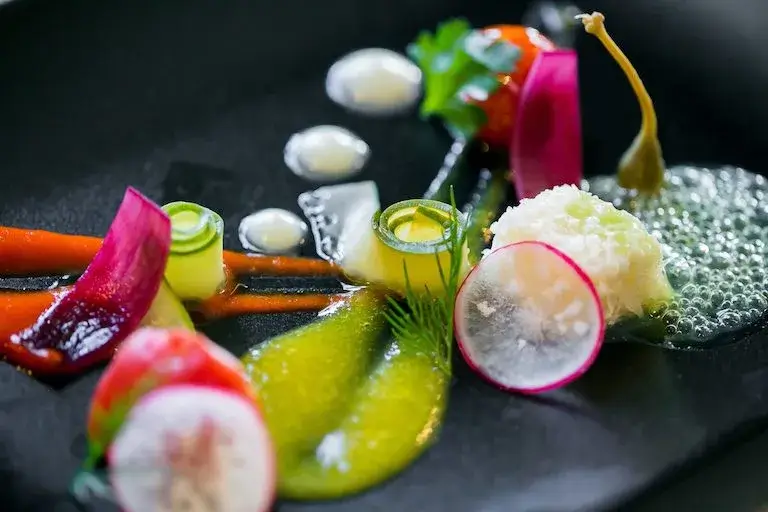
- Spherification: Encapsulating liquids in gel membranes creates bite-sized bursts of flavor, suitable for street-style sauces or condiments.
- Foams and Espumas: Airy, flavored foams provide aroma concentration without adding bulk.
- Gelification: Transforming liquids into gels or sheets allows deconstruction of traditional forms, such as tacos or dumplings.
- Emulsification: Creating stable mixtures of oil and water-based flavors enhances mouthfeel while reducing fat content.
2. Flavor Concentration and Aroma Engineering
- Sous-Vide Infusion: Low-temperature cooking preserves volatile aroma compounds in meats, seafood, or vegetables.
- Vacuum Concentration: Condenses flavors for sauces or toppings, reducing ingredient volume while intensifying taste.
- Aroma Release Control: Encapsulated aroma compounds or controlled temperature release allows multi-sensory engagement at the table.
3. Visual and Experiential Innovation
- Color and Transparency: Liquid gels, foams, and edible films add visual appeal while conveying flavor cues.
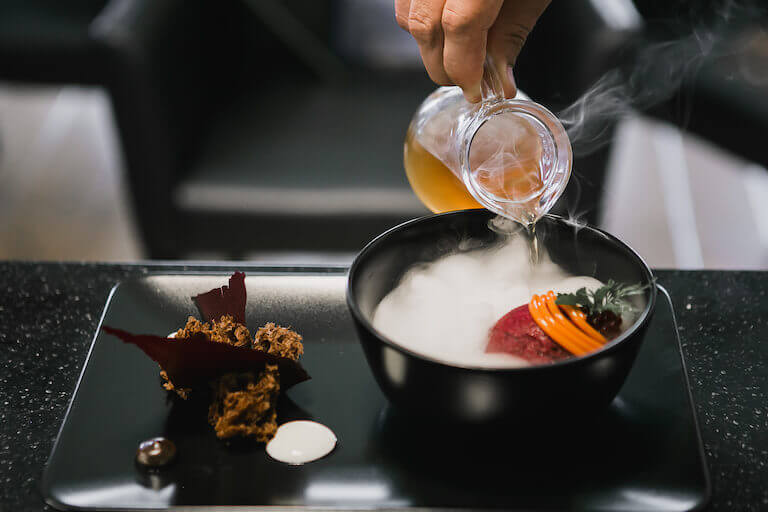
- Interactive Elements: Smoke, nitrogen vapor, and temperature contrasts create dynamic dining experiences reminiscent of the bustling street environment.
Techniques for Fusion: Deconstructing and Rebuilding Street Food
1. Deconstruction
Deconstruction involves breaking traditional dishes into their fundamental elements:
- Example: A taco can be deconstructed into a crispy corn shell, spiced protein gel, salsa espuma, and aroma microcapsules.
- Objective: Highlight each flavor and texture component while enabling innovative recombination.
2. Recomposition with Molecular Techniques
- Layering Flavors: Each element—protein, starch, condiment—is optimized for taste and texture.
- Precision Salt and Acidity Control: Enhances flavor perception without overwhelming the palate.
- Temperature Variation: Contrasts hot proteins with chilled foams or gels, enhancing sensory interest.
3. Fermentation and Umami Enhancement
- Fermentation amplifies savory taste through microbial breakdown of proteins and starches.
- Examples include using kimchi or pickled vegetables from street traditions, then concentrating their flavor and aroma using vacuum reduction or gelation.
4. Crispiness and Crunch Optimization
- Molecular techniques can create novel textures: dehydrated powders, aerated gels, and flash-fried foams mimic street-style crunch with a modernist twist.
- These manipulations maintain nostalgia while enhancing mouthfeel sophistication.
Case Studies: Global Examples of Street Food Meets Molecular Gastronomy
1. Latin American Street Foods
- Empanadas: Reimagined using spherified fillings and crispy gel sheets to separate flavors.
- Ceviche: Citrus-cured seafood served as layered gels and foams, preserving freshness while adding aroma intensity.
- Arepas: Corn-based shells infused with vacuum-concentrated sauces and edible films for controlled flavor bursts.
2. Asian Street Foods
- Bao Buns: Steamed buns infused with aromatics, complemented by foamed sauces and gelled fillings.
- Pad Thai: Deconstructed into rice noodle ribbons, flavor gels, nut powders, and microherb garnishes.
- Satay: Meat skewers paired with concentrated peanut emulsions and dehydrated spice powders, enhancing aromatic impact.
3. Cross-Cultural Fusion
- Combining Latin empanadas with Asian umami fillings (miso-marinated mushrooms, fermented beans) creates a hybrid snack that maintains authenticity while introducing new flavor dimensions.
- Molecular reinterpretation allows chefs to combine crispy, creamy, and aromatic elements in ways impossible with traditional cooking alone.
Culinary Science Behind Fusion Success
1. Flavor Pairing and Chemical Complementarity
- Esters, aldehydes, and terpenes from Latin herbs complement Asian aromatics like lemongrass, ginger, and kaffir lime.
- Glutamate-rich ingredients (soy, fermented beans) enhance umami, harmonizing with Latin chili or roasted corn.
2. Textural Science
- Multimodal texture perception—combining crunch, chew, and creaminess—engages mechanoreceptors and increases pleasure.
- Molecular modifications allow precise replication and enhancement of street food textures.
3. Aroma–Taste Interaction
- Aroma molecules are concentrated in foams or encapsulated gels to maximize olfactory stimulation.
- Heat, release timing, and moisture content are controlled to match traditional flavor cues while providing novel experiences.
4. Sensory-Specific Satiety and Flavor Layering
- Layering flavors and textures allows diners to experience multiple taste peaks, extending enjoyment and mimicking the excitement of street eating in a fine-dining setting.
Challenges in Integrating Street Food and Molecular Gastronomy
- Maintaining Cultural Authenticity: Molecular techniques can risk alienating diners if they obscure traditional cues.
- Ingredient Sourcing: Street ingredients may require modification or concentration to function in molecular forms.
- Cost and Accessibility: Laboratory-level equipment and reagents can be expensive, limiting scalability.
- Diner Education: Introducing unfamiliar textures or aromas may require storytelling and guided tasting to ensure appreciation.
Future Directions
- Sustainability and Local Sourcing
- Using local ingredients and reducing waste aligns with both street food principles and molecular gastronomy’s precision techniques.
- Personalized Street-to-Table Experiences
- Sensorial profiling and AI-based flavor prediction can tailor dishes to individual preferences.
- Global Innovation Labs
- Collaborative kitchens between traditional chefs and molecular gastronomists accelerate knowledge transfer and recipe development.
- Health-Oriented Fusion
- Molecular techniques allow flavor intensity optimization while reducing sodium, sugar, and fat, creating healthier street-inspired dishes.
Conclusion: The Science and Art of Street Food Reinvented
Combining local street food with modern molecular gastronomy represents a culinary frontier where tradition meets scientific innovation. By deconstructing flavors, manipulating textures, and strategically recombining elements, chefs honor cultural heritage while offering diners unprecedented sensory experiences.
This fusion achieves multiple goals:
- Preservation: Safeguards the essence of traditional street flavors.
- Innovation: Introduces modern textures, aromas, and presentation.
- Scientific Understanding: Explains why flavors and textures are satisfying, guiding reproducible and optimized creations.
- Global Dialogue: Connects culinary traditions across regions and cultures through science-informed creativity.
As chefs continue to explore this intersection, the world of gastronomy evolves beyond recipes, combining cultural storytelling, sensory science, and modernist innovation to redefine how we experience street food on the global stage.