








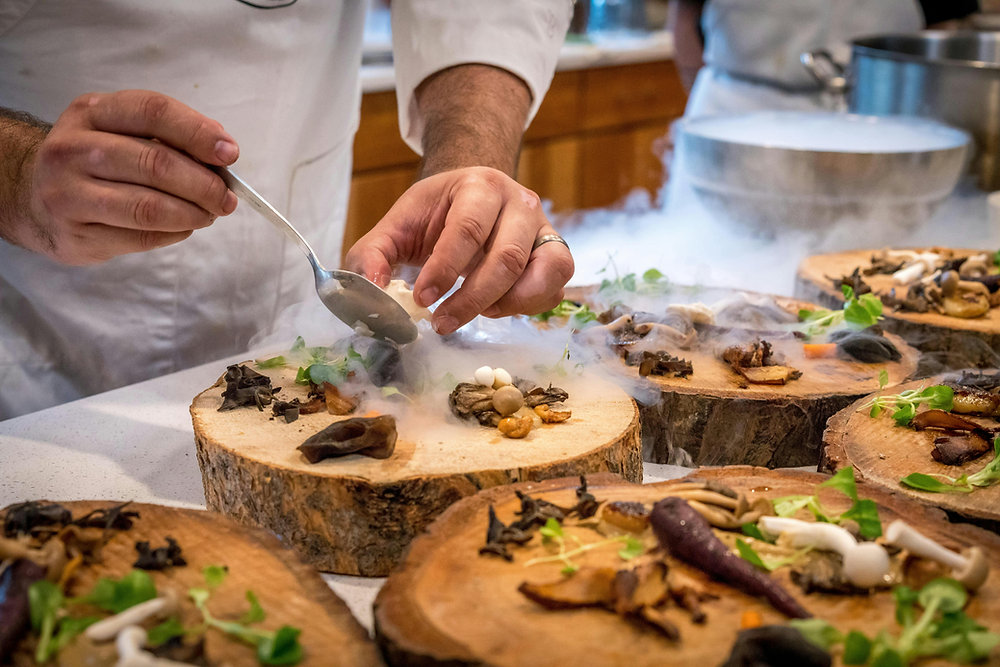

Introduction: When Haute Cuisine Meets the Laboratory
For much of modern history, fine dining and scientific research occupied separate worlds. One was driven by intuition, craftsmanship, and sensory mastery; the other by data, experimentation, and empirical validation. Chefs were artists, scientists were analysts, and collaboration between the two was rare, if not unimaginable.
Today, this separation is rapidly dissolving.
Across the globe, high-end restaurants are forming deep, structured partnerships with research institutions—including universities, food science laboratories, agricultural research centers, medical schools, and technology institutes. These collaborations go far beyond occasional consulting or one-off experiments. They represent long-term, systematic integration of scientific thinking into culinary creation, and culinary insight into scientific inquiry.
This convergence is reshaping not only how elite cuisine is created, but also how knowledge about food, health, sustainability, and human perception is produced. This article explores why such collaborations are emerging now, how they function, what they produce, and what they signal about the future of gastronomy and science alike.
1. From Craft to Knowledge System: The Evolution of Fine Dining
1.1 Fine Dining as a Historically Intuitive Practice
Traditional haute cuisine relied heavily on:
- Apprenticeship and tacit knowledge
- Sensory judgment refined over years
- Repetition, observation, and intuition
While deeply sophisticated, this knowledge was often undocumented, non-transferable, and resistant to formal analysis. Chefs knew what worked, but rarely articulated why.
1.2 The Limits of Intuition Alone
As fine dining became more experimental and ambitious, intuition alone began to show its limits:
- New ingredients lacked historical precedent
- Novel techniques required precise control
- Diners demanded experiences that engaged all senses
At this point, science shifted from optional to essential.
2. Why High-End Restaurants Seek Research Partnerships Today
2.1 Complexity Beyond the Kitchen
Modern fine dining operates within complex systems:
- Global supply chains
- Environmental constraints
- Health and nutrition awareness
- Technological acceleration
Understanding these systems requires scientific tools beyond traditional culinary training.
2.2 Innovation Pressure at the Top Tier
At the highest level, differentiation is no longer about luxury ingredients alone. It is about:
- Originality
- Conceptual coherence
- Intellectual depth
Research collaboration provides chefs with new conceptual and technical frontiers.
2.3 Credibility and Knowledge Legitimacy
Partnerships with research institutions add:
- Methodological rigor
- External validation
- Knowledge transparency
Fine dining increasingly positions itself not just as entertainment, but as a site of knowledge production.
3. What Research Institutions Gain from Fine Dining Collaboration
3.1 Living Laboratories for Human Perception
Restaurants provide real-world environments to study:
- Taste perception
- Multisensory integration
- Emotional responses to food
Unlike controlled lab settings, fine dining offers complexity, context, and authenticity.
3.2 Translating Abstract Science into Practice
Scientific insights often struggle to reach the public. Collaboration with chefs allows researchers to:
- Materialize theory into experience
- Communicate findings through taste and emotion
- Test applications at a human scale
Cuisine becomes a medium for science communication.
3.3 New Research Questions from Culinary Practice
Chefs pose questions scientists might not otherwise ask:
- How does texture affect memory?
- Can bitterness be perceived as comforting?
- How do cultural expectations reshape sensory thresholds?
These questions expand scientific inquiry itself.
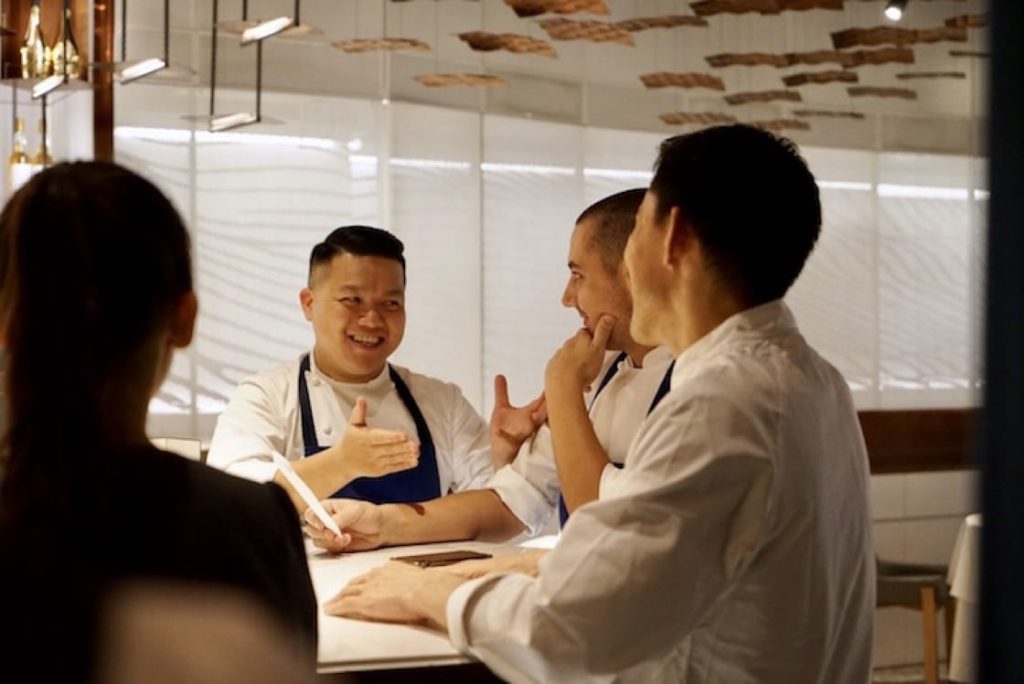
4. Models of Collaboration: How These Partnerships Are Structured
4.1 Embedded Scientists in Restaurants
Some high-end restaurants host:
- Food scientists
- Chemists
- Sensory researchers
These professionals work alongside kitchen teams, translating hypotheses into edible experiments.
4.2 Joint Research Labs and Innovation Centers
Other collaborations establish shared facilities where:
- Chefs and researchers co-design experiments
- Data collection and tasting occur simultaneously
- Findings benefit both academic and culinary goals
These labs blur the boundary between kitchen and laboratory.
4.3 Academic Partnerships and Fellowships
Universities increasingly offer:
- Culinary research residencies
- Chef-in-researcher programs
- Cross-disciplinary fellowships
Knowledge flows in both directions.
5. Molecular Gastronomy: The First Major Bridge
5.1 From Curiosity to Discipline
Molecular gastronomy was among the first movements to formalize chef-scientist collaboration. It explored:
- Physical and chemical transformations in cooking
- Texture, emulsions, foams, and gels
- The scientific explanation of traditional techniques
While sometimes misunderstood as novelty-driven, its deeper contribution was methodological.
5.2 Beyond Technique: A Shared Language
Molecular gastronomy gave chefs:
- Scientific vocabulary
- Experimental frameworks
- Confidence to engage with research
This laid the foundation for broader, more mature collaborations.
6. Sensory Science and the Fine Dining Experience
6.1 Taste Is Only One Sense
Research shows that flavor perception involves:
- Smell
- Vision
- Sound
- Touch
- Context and expectation
Fine dining restaurants collaborate with neuroscientists and psychologists to design experiences that engage all senses intentionally.
6.2 Measuring the Intangible
Through scientific tools, chefs can now analyze:
- Emotional responses
- Memory retention
- Perceived intensity versus actual concentration
This transforms experience design from intuition to informed experimentation.
7. Nutrition, Health, and Functional Fine Dining
7.1 Moving Beyond Indulgence
High-end dining is increasingly questioned for its health implications. Collaboration with medical and nutrition research institutions enables:
- Nutrient-aware menu design
- Reduced reliance on excess fat, sugar, and salt
- Exploration of functional ingredients
Luxury and well-being are no longer mutually exclusive.
7.2 Personalized and Preventive Eating
Research partnerships open the door to:
- Personalized nutrition models
- Metabolic insights
- Preventive health approaches
Fine dining becomes a testing ground for future dietary paradigms.
8. Sustainability and Environmental Research
8.1 Rethinking Ingredients at a Systems Level
Collaborations with agricultural and environmental scientists help chefs understand:
- Soil health
- Biodiversity
- Climate resilience
Ingredient choice becomes an ethical and scientific decision, not just a culinary one.
8.2 Waste Reduction Through Research
Scientific analysis of kitchen waste leads to:
- Byproduct utilization
- Preservation innovation
- Circular menu design
Fine dining kitchens evolve into sustainability laboratories.
9. Fermentation, Microbiology, and Time-Based Cuisine
9.1 Rediscovering Ancient Techniques with Modern Science
Fermentation is a key area of collaboration:
- Microbial ecosystems are mapped and controlled
- Flavor development is tracked over time
- Safety and consistency are ensured
This bridges ancestral knowledge and contemporary science.
9.2 Time as an Ingredient
Scientific understanding of time-based processes allows chefs to:
- Design flavor evolution
- Control aging and maturation
- Explore temporal dining experiences
Cuisine becomes four-dimensional.
10. Data, Technology, and Computational Gastronomy
10.1 Data-Informed Creativity
Research institutions contribute tools for:
- Flavor compound analysis
- Recipe network modeling
- Predictive experimentation
Chefs use these insights to expand, not constrain, creativity.
10.2 Artificial Intelligence as a Research Partner
In collaboration with computer science departments, fine dining explores:
- AI-assisted ideation
- Pattern recognition in taste preferences
- Optimization of complex processes
Human judgment remains central, but augmented.
11. Education and the Next Generation of Culinary Thinkers
11.1 Redefining Culinary Education
Chef-scientist collaboration reshapes training:
- Scientific literacy becomes essential
- Critical thinking is emphasized
- Experimentation replaces rote replication
Future chefs are thinkers as much as technicians.
11.2 Cross-Disciplinary Talent
New hybrid professionals emerge:
- Culinary researchers
- Sensory designers
- Food system innovators
These roles would not exist without institutional collaboration.
12. Cultural and Ethical Dimensions
12.1 Respecting Culinary Heritage
Scientific analysis risks reducing cuisine to components. Responsible collaboration ensures:
- Cultural context is preserved
- Traditional knowledge is credited
- Innovation does not erase identity
Chefs act as cultural interpreters, not extractors.
12.2 Ethics of Knowledge Ownership
Questions arise:
- Who owns research outcomes?
- How are communities acknowledged?
- How is knowledge shared responsibly?
Transparent frameworks are essential.
13. Economic and Industry Impacts
13.1 Fine Dining as R&D Engine
High-end restaurants increasingly function as:
- Research and development hubs
- Proving grounds for new ideas
- Influencers of mainstream food systems
Insights developed at the top often trickle down.
13.2 Scaling Without Dilution
Scientific collaboration helps translate:
- Techniques
- Processes
- Sustainability models
into broader applications without losing integrity.
14. Challenges and Limitations
14.1 Different Timelines and Incentives
Science values:
- Replication
- Long-term study
- Peer review
Restaurants operate on:
- Daily service
- Financial pressure
- Immediate feedback
Aligning these rhythms requires patience and trust.
14.2 Risk of Over-Intellectualization
There is a danger that:
- Experience becomes overly conceptual
- Emotional connection is lost
The best collaborations maintain balance between intellect and pleasure.
15. The Future: A New Knowledge Ecosystem Around Food
15.1 Restaurants as Cultural-Scientific Institutions
In the future, leading restaurants may function like:
- Cultural institutions
- Research outposts
- Educational platforms
Their value extends beyond meals.
15.2 From Elite to Influential
While these collaborations begin in high-end dining, their implications reach:
- Public health
- Sustainability policy
- Food system resilience
Fine dining becomes a driver of systemic change.
Conclusion: When Collaboration Redefines What Food Can Be
The deep collaboration between high-end dining and research institutions marks a profound shift in how society understands food. Cuisine is no longer seen only as craft or luxury, but as a serious field of inquiry—one capable of generating knowledge, testing ideas, and shaping the future.
When chefs and scientists work together, intuition meets evidence, tradition meets innovation, and pleasure meets responsibility. The result is not colder or more technical food, but richer, more intentional experiences—meals that nourish the body, stimulate the mind, and reflect a deeper understanding of the world.
In this convergence, fine dining finds new relevance, and science finds a new voice. Together, they remind us that food is not just something we consume—it is something we can study, design, and rethink, at the highest level, for the benefit of both culture and society.